Area of Expertise
Soil Analysis and Fertilization Guide
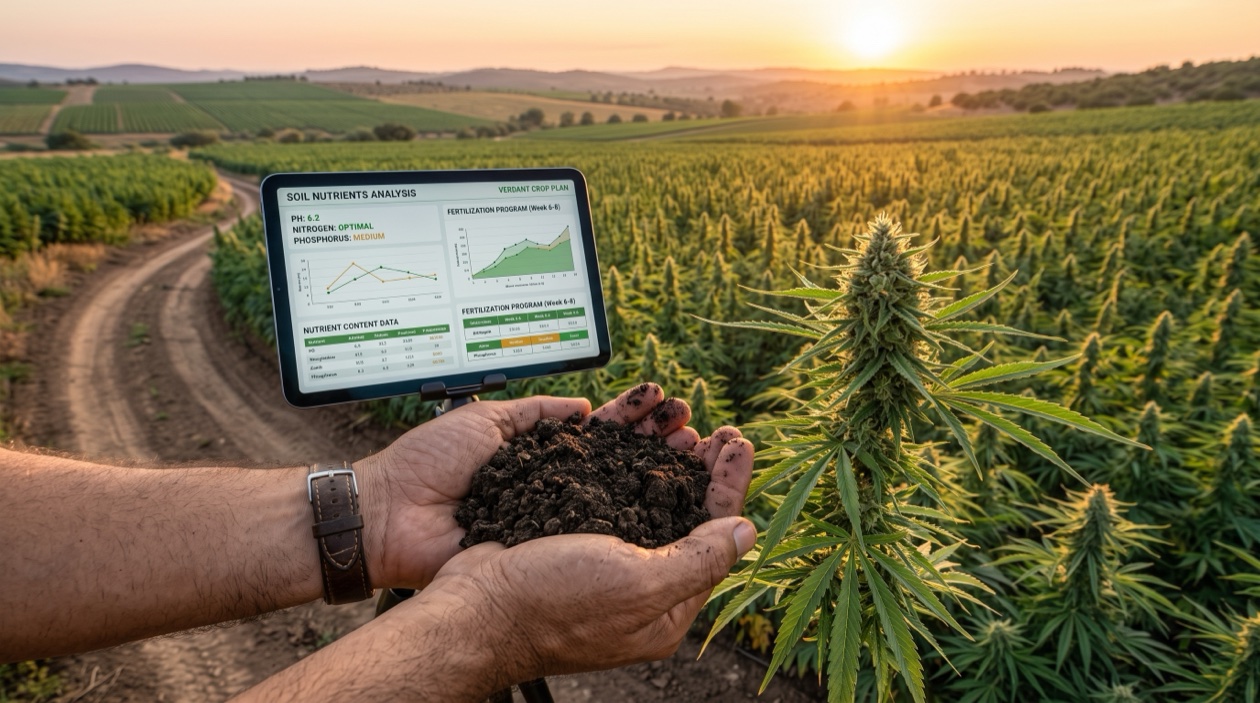
Why does soil analysis matter for crop nutrition?
A soil test puts numbers on what your land can and cannot supply. Without it, fertilization is guesswork — shaped by the local supplier’s recommendation or a neighbour’s habit. Both paths lead to the same outcome: either wasted spend on nutrients the soil already holds, or a yield ceiling caused by a deficiency nobody spotted.
In field work across Turkey, the most common situation I encounter is a grower who did get the test done, but left the interpretation to the seller. Reading a report correctly — understanding the interactions between pH, EC, organic matter and individual nutrients, and mapping them to the specific crop — is itself a specialist task. Our guide on reading a soil test report walks through each parameter step by step.
What does a good fertilization programme actually cover?
A programme brings together the soil test, the crop’s seasonal demand curve, the irrigation system and the available fertilizer sources. Nitrogen leads during vegetative growth; phosphorus and potassium take over at flowering and fruiting; certain micronutrients are only available in a narrow pH band. Getting the timing wrong matters as much as getting the quantity wrong.
For operations with fertigation, the programme is integrated with EC and pH targets in the drip line. Drain water monitoring is the feedback loop that confirms the programme is working. Where soil data alone is not enough, leaf tissue analysis reveals uptake barriers that no soil test can detect.
What does this silo cover?
- Reading the soil test report: Interpreting pH, EC, organic matter and nutrient values in plain terms
- Building a fertilization programme: Step-by-step plan, source selection and seasonal scheduling
- Fertigation explained: Feeding through the drip line; EC-pH management and drain monitoring
- Interpreting leaf tissue analysis: Seeing what soil tests cannot — uptake barriers and hidden deficiencies
For a programme built around your specific field or greenhouse, reach out through the consultancy page.
Guides in this topic
Building a Fertilization Programme
How to build a crop-specific fertilization programme: reading the soil test, calculating NPK demand, choosing fertilizer sources and scheduling applications.
Fertigation: What It Is and How It Works
What is fertigation, which crops benefit, how EC and pH are managed in the drip line, and why drain monitoring is essential: a practical guide to fertigation.
How to Read a Soil Test Report
Understanding pH, EC, organic matter, NPK and micronutrient values in a soil test report: what each number means, when it matters and what to do about it.
Interpreting a Leaf Tissue Analysis
What leaf tissue analysis measures, how it differs from a soil test, correct sampling and how to use results to calibrate your fertilization programme.
Frequently asked questions
How often should I get a soil test?
Crops remove nutrients and fertilizer applications change the soil every season. In vegetable greenhouses, testing each season is worthwhile. In orchards and perennial crops, once a year is a practical rhythm. Before any new planting on unfamiliar land, a test is essential.
What depth should I sample?
0-30 cm covers the active root zone for most crops. For deep-rooted plants such as vines, olives and hemp, a second sample at 30-60 cm adds useful information. If soil texture or colour varies visibly across the field, sample each zone separately.
High pH on the report — what does that mean?
Above about pH 7.5, iron, manganese, zinc and boron become increasingly unavailable to plants, even when reserves look adequate. The plant shows chlorosis. Correction options are sulphur application, acidified irrigation or chelated micronutrients chosen for the pH range.
Soil test versus leaf analysis — are they the same?
No — they are complementary. The soil test shows what reserves exist; the leaf test shows what the plant is actually taking up. Sometimes the soil holds enough nutrient but the plant cannot access it. Only leaf analysis reveals that gap.
Who should write the fertilization programme?
In Turkey, certain fertilizer applications require a licensed agronomist to write the prescription. Beyond the legal requirement, an independent consultant provides a more objective programme than a fertilizer salesperson.
Get consultancy for soil analysis & fertilization
A program tailored to your field, on-site trials and grower training. Message on WhatsApp for a first consultation.
Author
Ramazan Yıldırım
Senior Agricultural Engineer · Licensed to issue plant-protection prescriptions (Turkish Ministry of Agriculture)
Over 20 years of field experience advising growers across Türkiye and the Turkic states; founder of PR Tarım A.Ş. and Technical Director at Fernabio.
About Ramazan Yıldırım →