Area of Expertise
Soilless Growing: From Setup to Harvest
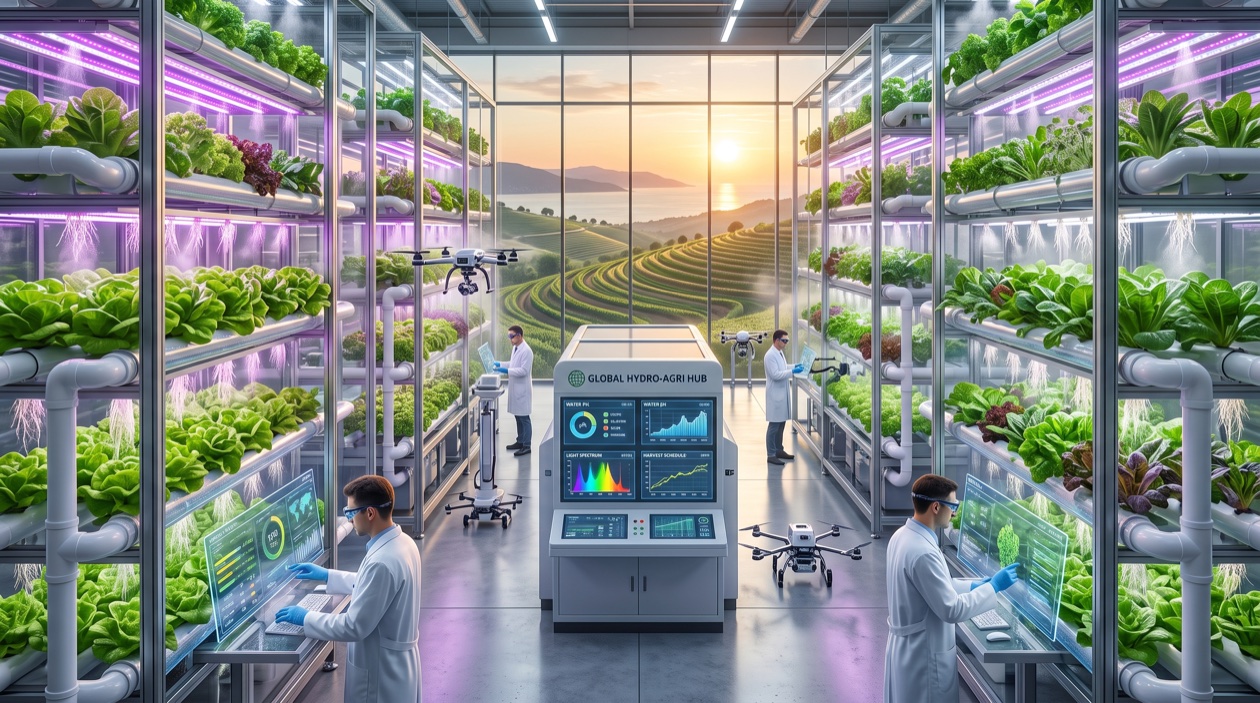
What is soilless growing?
Soilless growing is a collective term for production systems that deliver water and nutrients to the root zone without soil as the intermediary. The approach ranges from nutrient film technique (NFT) and deep water culture (DWC), in which roots sit in or beside flowing solution, to substrate systems in which the plant is physically held in a solid, inert medium.
In Turkey, substrate systems dominate commercial protected production: the plant grows in coir, perlite or rockwool; fertigation delivers the nutrient solution; and drain water is collected and monitored. The system has become the standard in professional greenhouse production and is spreading to smaller operations. For a comparison of available system types, see the hydroponic system types guide.
Why move to soilless production?
Soil problems — heavy clay, salinity, root disease accumulation — are the most common driver. In a substrate system the root environment is renewed or sterilized between seasons, breaking the disease cycle that builds up in soils used year after year. Alongside disease control, higher yield per unit area and more predictable product quality are the other reasons commercial growers make the switch.
The trade-off is management intensity. Soil buffers feeding errors and irregular irrigation to a degree; substrate does not. Every deviation from the target EC, every gap in irrigation timing, reaches the plant without attenuation. Systematic monitoring is built into the system, not added as an afterthought. The nutrient solution preparation guide covers how to get the chemistry right from day one. For specialist advice tailored to your operation, the soilless growing consultancy page is the starting point.
What does this silo cover?
- Hydroponic system types: NFT, DWC and substrate compared — system choice for your crop and conditions
- Nutrient solution preparation: Balancing macro and micronutrients, pH and EC targeting
- NFT system management: Channel design, flow rate, crop selection and season management
- Soilless vegetables: Substrate choice, production management from transplant to harvest
For a system and programme designed around your specific greenhouse or field, reach out through the consultancy page.
Guides in this topic
Hydroponic System Types Compared
NFT, DWC, substrate and aeroponic systems compared: advantages, limitations and how to choose the right system for your crop, scale and capacity.
Managing Production in an NFT System
NFT system setup and management: channel slope, flow rate, crop selection, common failures and how to run continuous production without pump or pH incidents.
Preparing a Nutrient Solution
How to prepare a hydroponic nutrient solution: stock mixing rules, EC and pH targeting, adjusting for growth stage and why water quality matters most.
Soilless Vegetable Growing
Substrate production of tomato, pepper and cucumber: substrate choice, production management from transplant to harvest, EC-pH monitoring and troubleshooting.
Frequently asked questions
When does soilless growing make economic sense?
Where soil is heavy clay, saline, has a high water table or carries persistent root disease pressure — substrate systems remove the obstacle. They also make sense where the aim is to raise yield per unit area in a limited space, or where a clean root zone each season is worth more than the additional management cost.
What is the difference between NFT, DWC and substrate?
In NFT a thin film of nutrient solution flows continuously over the roots. In DWC the roots are submerged in oxygenated solution. In substrate systems the plant is held in a solid medium and fed by drip irrigation; drain is collected and monitored. Each system has a different management profile and crop range.
What are the most common mistakes in soilless systems?
At setup: undersized root volume, poor drain design and feeding that is not based on measurement. In operation: neglecting EC-pH monitoring, not tracking drain percentage and missing the early signs of salt build-up. In soilless production, mistakes escalate faster than in soil because there is no buffering.
Which crops are best established in soilless systems?
Berries (raspberry, blackberry, strawberry), greenhouse tomato, pepper and cucumber have the most extensive soilless track record. Their nutrient and water requirements are well characterised and reference EC targets exist. New crops carry more uncertainty.
Does soilless growing actually reduce water use?
A correctly designed and managed closed-loop system with drain return can significantly reduce water consumption. Incorrect drain management or unnecessary leaching irrigation eliminates that advantage. Drain recovery must be designed in from the start, not retrofitted.
Get consultancy for soilless growing
A program tailored to your field, on-site trials and grower training. Message on WhatsApp for a first consultation.
Author
Ramazan Yıldırım
Senior Agricultural Engineer · Licensed to issue plant-protection prescriptions (Turkish Ministry of Agriculture)
Over 20 years of field experience advising growers across Türkiye and the Turkic states; founder of PR Tarım A.Ş. and Technical Director at Fernabio.
About Ramazan Yıldırım →