Area of Expertise
Biological Control in Greenhouses: A Guide
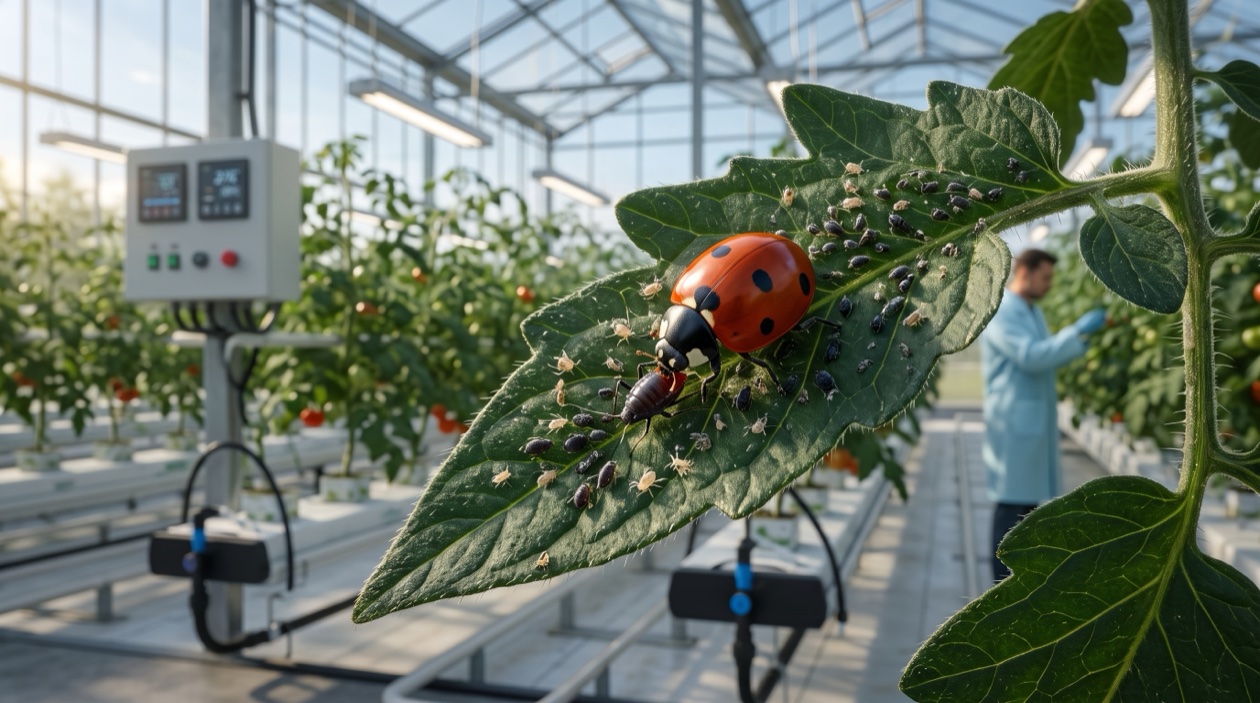
What is biological control in greenhouses?
Biological control suppresses pest insects using their natural enemies — predatory and parasitoid beneficials. Compared with chemical control it reduces residue and resistance risk and maintains a sustainable balance by protecting beneficial populations. In modern protected production, biological control forms the backbone of integrated pest management (IPM).
How is a biological control program built?
The program begins with correct identification of the crop and dominant pests. Different beneficials are used against whitefly, thrips, spider mite and aphid. The most critical factor we see in the field is timing: releases must start early and at regular intervals while pest density is low. Any chemical applications during the program must be selective and compatible with beneficials — otherwise the released beneficials die and the investment is wasted.
How are bumblebees used for pollination?
In protected crops such as tomato, bumblebees ensure effective flower pollination, raising fruit set and quality. Hive count, placement and timing are planned by flowering intensity and season. Hives per decare and application detail are covered in the bumblebee article.
What do the guides in this topic cover?
The sub-articles cover bumblebee use in greenhouses (hives per decare, when and how) and the beneficial-insect release program (predator and parasitoid schedule). For an IPM program tailored to your greenhouse, reach me through the consultancy page.
Guides in this topic
Beneficial Insect Release Program and Calendar
Beneficial insect release program: picking predators and parasitoids for whitefly, thrips, spider mite and aphid, plus release timing and monitoring.
Bumblebee Pollination in Greenhouses
Bumblebee pollination in greenhouses: which crops need hives, when to introduce them, how to read bite marks and how to protect bee health during spraying.
Greenhouse Humidity Management and Disease
Greenhouse humidity management sets disease and pest pressure. Field ways to cut risk with correct venting, irrigation timing and a night strategy.
Greenhouse Hygiene: Cutting Pest Pressure
Lowering pest pressure with greenhouse hygiene and cultural measures: crop debris management, entrance hygiene, tool disinfection and between-crop clean-down.
Integrated Pest Management Basics: How IPM Works
Integrated pest management (IPM) combines monitoring, prevention, biological control and carefully timed chemical intervention into one systematic framework.
Spider Mite Biological Control in Greenhouses
Biological control of spider mite in greenhouses: predatory mites, release timing and monitoring methods from field experience.
Sticky Traps in Greenhouses: Use and Monitoring
Yellow and blue sticky traps in greenhouses: which colour for which pest, where to hang them, how to read counts and how to link them to biological control.
Whitefly Biological Control: Parasitoids, Timing, Monitoring
How to suppress greenhouse whitefly with parasitoids, release timing, sticky trap monitoring and cultural support for residue-free production.
Frequently asked questions
Does biological control fully replace chemical spraying?
Usually no; in integrated pest management biological control is the backbone but can be supported with selective, beneficial-compatible products to minimise residue and resistance risk.
When should beneficial releases start?
Start releases early, while pest populations are low. Late releases make it much harder for beneficials to suppress the pest. See the beneficial-insect release schedule for detail.
What do bumblebees do?
Bumblebees pollinate crops such as tomato, improving fruit set and quality. Hives per decare and placement are planned by crop and season.
Which crops use biological control?
It is common in protected tomato, pepper, cucumber, eggplant and ornamentals. The beneficial mix is chosen by crop and pest profile.
Get consultancy for biological control
A program tailored to your field, on-site trials and grower training. Message on WhatsApp for a first consultation.
Author
Ramazan Yıldırım
Senior Agricultural Engineer · Licensed to issue plant-protection prescriptions (Turkish Ministry of Agriculture)
Over 20 years of field experience advising growers across Türkiye and the Turkic states; founder of PR Tarım A.Ş. and Technical Director at Fernabio.
About Ramazan Yıldırım →