Soilless Growing
Coco Peat Substrate Guide: Preparation, Mix and Management
Published: October 28, 2026
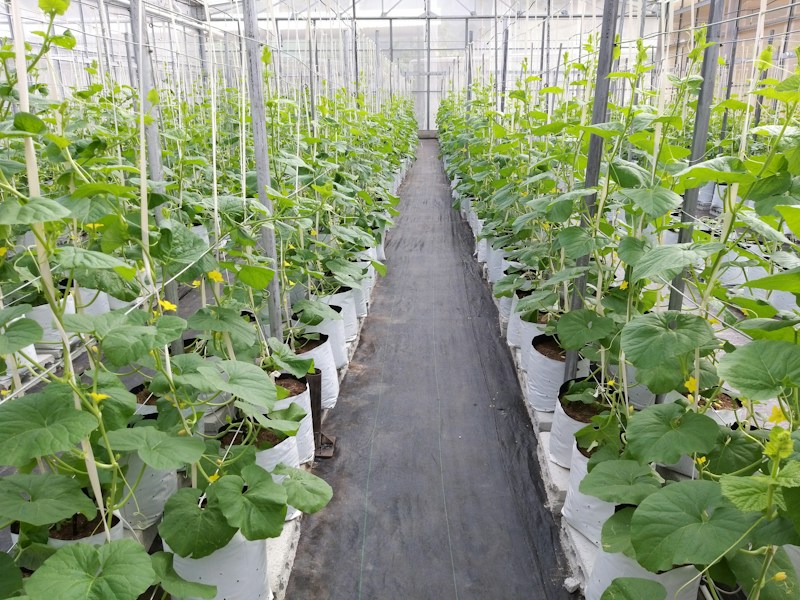
What is coco peat and why is it the dominant commercial substrate?
Coco peat — also called coir or coconut fibre — is produced from the fibrous husk that surrounds the coconut fruit. After harvest and processing, the dried and graded fibre becomes one of the most widely used substrates in protected horticulture worldwide. It is available in loose bulk form, compressed blocks (bricks), and ready-to-use grow bags.
The combination of properties that makes coco peat commercially attractive is unusual. It holds 8–10 times its own weight in water, which supports consistent moisture between irrigations. At the same time, its fibrous structure maintains sufficient air-filled porosity to supply roots with oxygen — a balance that many substrates fail to achieve without blending. Its natural pH ranges from 5.5 to 6.5, covering the target zone for most vegetable and fruit crops. It is a renewable agricultural by-product, available in large volumes at competitive cost, and reusable with appropriate seasonal treatment.
Within the broader soilless growing system options, substrate systems — coir, perlite or rockwool — dominate commercial greenhouse production in Turkey and across the Mediterranean. Coco peat is the most accessible of these substrates and offers the best initial cost-to-performance ratio for most growers entering soilless production.
What coco peat formats are available: loose, bricks and grow bags?
Understanding which form fits your operation is the first practical decision.
Loose (bulk) coir: The processed fibre in its original uncompressed state. Used to fill pots or custom-sized bags. Quality varies substantially between suppliers — bulk coir should ideally be analysed for EC and potassium content before purchase.
Compressed bricks: High-pressure blocks that expand to their original volume when wetted. Practical for trials, small operations, or operations without ready bulk access. For commercial greenhouse production at scale, ready-made grow bags are generally more efficient.
Coco peat grow bags: The standard for commercial protected horticulture. Long rectangular bags are placed directly on the growing bench; drain holes are cut at set positions; drip emitters are inserted. Tomato, pepper, cucumber, strawberry and cane berry are commonly grown this way. Standardisation of bag dimensions, drain-hole placement and drip fitting positions allows the whole system to be set up and managed uniformly at scale. The step-by-step setup is covered in our coco peat grow bag system setup guide.
How should you prepare coco peat before use: flushing and soaking?
Inadequate preparation is the most common source of early problems in coco peat systems — and one of the most avoidable.
Potassium flushing (EC flush):
Raw coco peat carries elevated potassium (K) from the coconut husk. When potassium levels in the substrate are high, calcium and magnesium uptake is competitively blocked. The result: unexpected yellowing, leaf distortion and micronutrient symptoms in the first weeks of production, which are often misdiagnosed as solution mixing errors.
Flush the substrate two to three times with low-EC water (below 1.0 mS/cm, ideally pH-adjusted to 5.8–6.2) before planting. Each flush pass should drain completely before the next is applied. After flushing, check the drain EC — it should be below 1.5 mS/cm before planting begins.
Full and uniform soaking:
Dry or brick-format coco peat must be fully and uniformly wetted before transplanting. Planting into dry substrate forces seedling roots to establish without consistent moisture contact, causing early stress. For bricks, use a sufficiently large container; add water progressively until the block fully expands. Allow at least one hour of saturation time before use.
Irrigation water pH:
Adjust irrigation water to pH 5.8–6.2 before use. Many water supplies — particularly in regions where alkaline groundwater is the norm — arrive at pH 7.0–8.0. Alkaline water gradually raises substrate pH, eventually restricting iron, manganese and zinc uptake even when these elements are present in the solution. Phosphoric acid or nitric acid are the standard acidifiers for greenhouse water management.
How do coco peat and perlite blending ratios change by crop?
Coco peat can be used alone, but blending with perlite to increase air porosity is standard commercial practice. The right ratio depends on the crop, irrigation system capacity and local growing conditions.
| Crop | Coco peat | Perlite | Notes |
|---|---|---|---|
| Tomato, pepper | 70% | 30% | Balanced moisture-air ratio; commercial standard |
| Cucumber | 80% | 20% | Higher moisture preference; lower irrigation frequency |
| Strawberry, raspberry | 70–80% | 20–30% | Phytophthora risk managed through drain monitoring |
| Low-light or winter greenhouse | 75% | 25% | Slower drying matches lower evapotranspiration |
| High-temperature summer house | 60% | 40% | Higher perlite accommodates rapid drying under heat |
When perlite content increases, the substrate dries faster and irrigation frequency must rise proportionally. When perlite decreases, moisture retention increases but oxygen access decreases. Once a blend is selected, irrigation scheduling should be calibrated to match. For the nutrient solution side of the system, the nutrient solution preparation guide covers EC and formulation management. For berry-specific ratios and drainage adjustments, see our strawberry production in coco peat guide.
How is drain management and EC monitoring carried out?
In a substrate system, drain percentage is the clearest real-time indicator of what the root zone is experiencing. Managing it systematically is a core production skill.
Target drain rate: 15–30% of applied irrigation volume. Below 15%, the substrate is staying too wet — oxygen access is restricted and conditions favour root disease pathogens, particularly Pythium and Phytophthora. Above 40%, nutrient loss becomes significant and the system is wasting both water and fertiliser inputs.
Drain EC should be measured regularly — ideally daily during peak production. When drain EC consistently exceeds 1.5–2× the applied solution EC, salt accumulation in the substrate has reached the point where a fresh-water flush is required. This flush displaces accumulated salts before they begin restricting nutrient uptake and growth.
Irrigation timing in a coco peat system typically follows this pattern: first irrigation 1–2 hours after sunrise, last irrigation 1–2 hours before sunset. This allows the substrate to dry slightly overnight, improving root zone aeration and reducing conditions that favour foliar and root pathogens. The soilless vegetable production guide covers how these principles apply across specific crops.
How should end-of-season treatment and reuse be handled?
Reuse across seasons is one of coco peat’s strongest economic arguments. Achieving it requires a defined end-of-season protocol.
Step 1 — Root debris removal: After crop removal, mechanically remove as much root material as possible from the substrate. Dense root masses prevent uniform moisture distribution in the next season.
Step 2 — Salt flushing: Apply large volumes of fresh water until drain EC drops below 1.0 mS/cm. Do not proceed to disinfection until this target is reached — residual salts reduce disinfectant efficacy.
Step 3 — Disinfection: Steam sterilisation is the most reliable method at commercial scale and provides consistent pathogen elimination. Where steam is not available, approved disinfectant products can be used; follow manufacturer rates and contact times carefully.
Step 4 — Pre-planting verification: After treatment and before new-season transplanting, verify that substrate pH is 5.8–6.3 and EC is below 1.0 mS/cm. If values fall outside these ranges, additional flushing is required.
Replacement indicators: Darkening colour beyond a deep brown, persistent organic odour (anaerobic breakdown), visible structural collapse where fibres have disintegrated into fine particles, or persistent root disease in consecutive seasons — any of these indicate the substrate has reached end of service life and should be replaced.
Typical commercial replacement cycles range from 2 to 4 seasons. Operations with high disease pressure or intensive production schedules tend toward the shorter end of that range.
For how substrate choice fits with system type, nutrient management and crop-specific setup, see the soilless growing hub.
If you are planning a coco peat substrate system or optimising an existing setup, site-specific guidance on installation and irrigation scheduling is available through a consultancy engagement.
Frequently asked questions
What is coco peat and why is it used as a substrate?
Coco peat (also called coir or coconut fibre) is an organic growing medium produced from the fibrous husk of the coconut fruit. It holds 8–10 times its own weight in water while maintaining adequate air porosity — a combination rare among substrates. Its natural pH of 5.5–6.5 suits most vegetable and fruit crops. It is renewable, widely available, and reusable across multiple seasons with correct management.
How do you prepare coco peat before use?
Raw coco peat contains elevated potassium (K) carried over from the coconut husk. This potassium blocks calcium and magnesium uptake and causes nutritional imbalances if not removed. Flush the substrate two to three times with low-EC water (below 1.0 mS/cm) before planting. Then soak fully to achieve uniform moisture throughout the block or bag. Monitor irrigation water pH and keep it at 5.8–6.2; alkaline water (pH above 7.5) disrupts the substrate's pH balance.
What perlite ratio should I use with coco peat?
A 70% coco peat / 30% perlite blend is the commercial standard for tomato and pepper. Cucumber, which prefers higher substrate moisture, suits 80/20. Strawberry and cane berries typically grow at 70–80% coir. Increasing perlite accelerates drying and requires more frequent irrigation; decreasing it increases moisture retention but reduces oxygen access. Adjust based on your irrigation system and local climate conditions.
What drain percentage should I target in a coco peat system?
Target 15–30% of applied irrigation volume as drain. Below 15%, the substrate is staying too wet — Pythium and Phytophthora risk increases. Above 40%, nutrient loss becomes significant and irrigation frequency or volume should be reduced. Monitor drain EC regularly; if drain EC exceeds 1.5–2× the applied solution EC, the substrate has accumulated excess salts and requires a fresh-water flush.
Can coco peat be reused between seasons?
Yes. With proper end-of-season treatment, coco peat lasts 2–4 crop cycles. The process: remove root debris, flush with fresh water until drain EC drops below 1.0 mS/cm, then disinfect (steam sterilisation for commercial scale, or an approved disinfectant). Before planting, verify that pH sits at 5.8–6.3 and EC is below 1.0 mS/cm. Darkening colour, bad odour or structural collapse are signs the substrate needs replacement.
Is coco peat suitable for strawberry and berry production?
Yes — coco peat is widely used in protected strawberry and raspberry production. Its high water-holding capacity suits the shallow, spreading root system of strawberries. It is more pH-stable than peat-based mixes. Recommended ratio is 70–80% coir with 20–30% perlite. Drain management is important for controlling Phytophthora risk in berry crops.
What is the difference between coco peat bags and pots?
Grow bags are the commercial standard: long rectangular bags are placed on the growing bench, drain holes are cut at controlled positions, and drip emitters feed directly into the bag. Pots suit smaller operations or trials where individual plants need independent monitoring. For large-scale vegetable or strawberry production, grow bags offer standardisation, cost efficiency and easy drip-system integration.
Get consultancy for soilless growing
A program tailored to your field, on-site trials and grower training. Message on WhatsApp for a first consultation.
Author
Ramazan Yıldırım
Senior Agricultural Engineer · Licensed to issue plant-protection prescriptions (Turkish Ministry of Agriculture)
Over 20 years of field experience advising growers across Türkiye and the Turkic states; founder of PR Tarım A.Ş. and Technical Director at Fernabio.
About Ramazan Yıldırım →