Soilless Growing
Coco Peat Strawberry: Substrate Setup and Management
Published: October 29, 2026
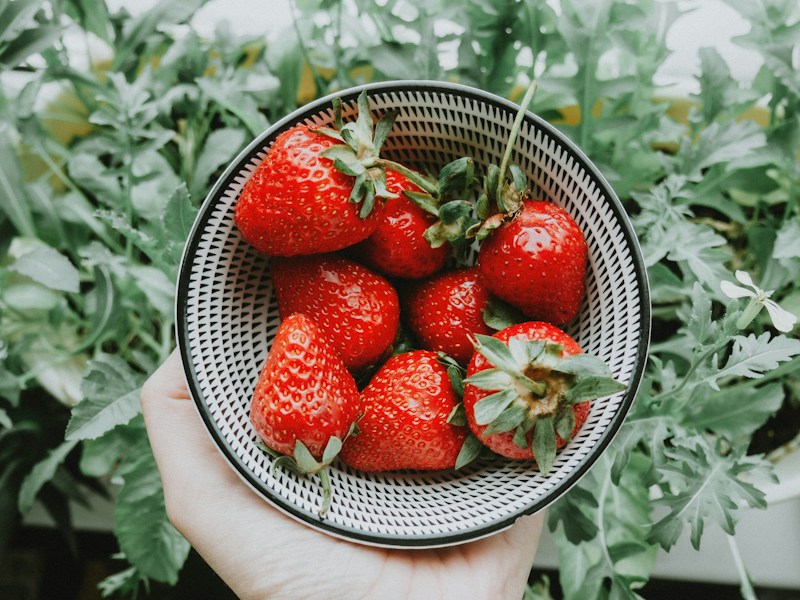
Why grow strawberries in coco peat instead of soil?
Strawberry has a shallow, laterally spreading root system that maps well onto the moisture distribution of a coir substrate. In field production, soil-borne pathogens — particularly Phytophthora fragariae, Verticillium dahliae and Fusarium oxysporum — accumulate over successive seasons, requiring fumigation or extended rotation intervals. Coco peat offers a clean slate: each season begins in a substrate free of the historical pathogen burden, with disinfection rather than fumigation as the renewal mechanism.
Raised gutter and table systems, which pair naturally with substrate bag production, eliminate ground-level harvesting. The ergonomic gain for picking crews is substantial, and fruit that never contacts soil enters the packhouse without contamination, preserving shelf life.
The precision achievable in EC and pH management through substrate systems — compared with the buffering variability of field soils — allows consistent control of flavour parameters (sugar-acid balance, firmness) that directly affect market returns, particularly for export and premium retail channels.
Within the range of soilless production formats, substrate systems dominate commercial strawberry production because they combine this control with the error-tolerance and crop familiarity that growers transitioning from soil can work with confidently.
How should substrate be selected and prepared for strawberry?
Strawberry roots require consistent moisture but will not tolerate waterlogging. Substrate selection and preparation have to create exactly this balance before the first plant goes in.
Blend ratio: A 70–80% coir and 20–30% perlite blend is the standard for commercial strawberry. Where Phytophthora pressure has been observed, or where irrigation water is heavily mineralised, increasing perlite to 30% improves drainage and aeration — at the cost of higher irrigation frequency. The ratio choice and the irrigation system’s delivery capacity must be matched at the planning stage.
Potassium flushing: Raw coco peat carries elevated potassium from the coconut husk processing. Without pre-use flushing, this free potassium competitively inhibits calcium and magnesium uptake in the first weeks after transplanting. The symptoms — leaf margin curl, yellowing, tip burn — are commonly misattributed to poor transplant quality or formulation errors. The fix is straightforward: flush the substrate two to three times with low-EC water (below 1.0 mS/cm) before planting, checking that drain EC falls below 1.5 mS/cm after flushing.
Full and uniform soaking: Transplant into fully wetted substrate. Dry coir around newly transplanted root balls causes immediate establishment stress. For bag systems, run the drip emitters through a pre-planting soak cycle and check by hand that wetting has reached the bag ends uniformly.
pH preparation: Adjust irrigation water to pH 5.8–6.2. In regions with alkaline mains water (pH above 7.0), phosphoric or nitric acid is used to correct before each irrigation. The coco peat substrate guide covers the preparation sequence in full.
How should transplant type and planting timing be selected?
Transplant type determines the production calendar — especially flowering timing, which drives harvest scheduling.
Frigo (cold-stored) transplants have completed their chilling requirement during cold storage. After transplanting, they initiate flowering quickly and uniformly, allowing planners to target a specific harvest window. This predictability suits winter and early spring production programmes. Frigo transplants establish root systems more slowly than fresh material initially, making substrate moisture management in the first two weeks particularly important.
Fresh (green) transplants are taken from actively growing runner plants without cold storage. They establish vegetatively faster than frigo material. Suitable for spring and autumn plantings where the natural cooling progression will drive flowering at the right time. In coco peat, where the substrate can be precisely moisture-managed, fresh transplants typically root quickly when the substrate arrives at correct temperature and moisture.
Planting density: Typical commercial ranges run four to six plants per grow bag or four to six plants per square metre depending on cultivar vigour, bag volume and system design. Dense plantings reduce air circulation and increase Botrytis risk; wider spacing allows better light interception and airflow. Ventilation management should be considered alongside density decisions.
How should irrigation be scheduled across growth stages?
Irrigation management in coco peat strawberry production is not a single programme applied across the whole season — it shifts meaningfully with each growth stage.
Establishment (transplanting + two to three weeks): Small, frequent irrigations maintain consistent moisture at the root ball without saturating the surrounding substrate. Total daily volume is low. Drain percentage measurement at this stage is less informative than later because root uptake is minimal and most water passes straight through.
Vegetative development: As the root system expands across the bag, daily irrigation volume increases progressively. Target drain rate of 15–25%. Schedule first irrigation one to two hours after sunrise; last irrigation one to two hours before sunset. Overnight substrate drying — a slight moisture reduction that promotes root-zone oxygenation — is a core management principle throughout the season.
Flowering and fruit set: Water demand peaks. Irrigation frequency and volume at their seasonal maximum. Moisture stress during fruit set interrupts calcium transport; the result is blossom-end rot-type symptoms visible at harvest, by which point they cannot be corrected. Consistent moisture supply here is not optional.
Harvest period: On picking days, reduce morning irrigation slightly. This concentrates fruit sugar and improves firmness. The reduction should be moderate — over-restricting causes plant water stress that compounds the next day and beyond. Post-harvest, return to the normal programme immediately.
How should EC and pH be managed through the season?
Strawberry nutrient demand changes substantially between vegetative and fruiting phases, and the solution formulation should follow.
Vegetative establishment: Target EC 1.4–1.8 mS/cm with a moderate nitrogen emphasis. High EC at transplanting places osmotic pressure on young roots before they have developed sufficient absorptive surface; starting conservatively and building is the reliable approach.
Flowering through harvest: Increase EC gradually to 2.0–2.5 mS/cm. Elevate potassium relative to the vegetative phase — potassium is central to fruit colour development, cell wall firmness and sugar-acid balance. Calcium requires consistent attention throughout: calcium moves with the transpiration stream, and any period of low transpiration (cool overcast days, poor ventilation) limits calcium delivery to developing fruit. Blossom-end rot symptoms in strawberry are a calcium availability problem, not a calcium supply problem — improving transpiration and irrigation uniformity rather than simply increasing calcium concentration is the correct response.
Maintain pH at 5.8–6.2 across all stages. Above pH 6.5, iron and manganese uptake is progressively restricted; interveinal chlorosis on young leaves is the diagnostic symptom. Full EC and solution management guidance is covered in the nutrient solution preparation guide.
Monitor drain EC at least three times per week during peak production. When drain EC consistently exceeds 1.5–2× applied solution EC, a fresh-water flush is required.
How is Phytophthora controlled in coco peat strawberry production?
Phytophthora fragariae and P. cactorum are the primary root and crown rot pathogens in strawberry. Both require anaerobic, waterlogged conditions to sporulate and infect — which makes substrate management the primary control lever.
Structural controls: Keep perlite content at or above 20%. Check drain hole openings weekly; coir fines migrate to low points in the bag and can partially block outlets over time. Where drain holes show signs of clogging, reopen with a probe. Never let the substrate stay continuously saturated overnight.
Irrigation timing: Last daily irrigation at least one to two hours before sunset. This ensures substrate moisture drops modestly through the night, restoring air-filled porosity before the next morning’s irrigation cycle. This single practice has more impact on Phytophthora prevention than any chemical or biological intervention applied to chronically wet bags.
Biological support: Trichoderma harzianum or Bacillus subtilis based products applied at transplanting or in the first irrigation cycles create a competitive rhizosphere environment that impedes pathogen establishment. These agents do not cure established infections; their value is preventive.
Bag replacement after disease: Bags that hosted a Phytophthora outbreak should be replaced, not recycled. The risk of incomplete disinfection followed by rapid reinfection from residual inoculum in the bag or drain channels outweighs the cost of new substrate.
What substrate factors influence harvest fruit quality?
In coco peat strawberry systems, substrate management directly affects the sensory and physical quality of harvested fruit.
Pre-harvest EC: Maintaining EC at 2.0–2.5 mS/cm through the fruiting period produces higher-sugar, firmer fruit than lower-EC programmes. The relationship is well-established in commercial strawberry substrate research: moderate osmotic concentration in the root zone drives sugar accumulation in the fruit.
Harvest-day irrigation: Reducing morning irrigation volume on picking days — not eliminating it — gives measurably firmer, more concentrated fruit. Over-reducing creates plant water stress that affects the next irrigation cycle and the following day’s harvest quality.
Calcium management: Tip burn and blossom-end-rot-type symptoms in the fruiting stage are visible at harvest and irreversible. Prevention requires consistent calcium supply through the season and conditions that support transpiration-driven calcium transport — adequate ventilation, appropriate air humidity management and uniform irrigation. Visual symptoms appearing at harvest mean the problem occurred two to three weeks earlier in fruit development.
Packhouse entry: Fruit from coir substrate in raised systems arrives at the packhouse without soil adhesion, with no field mud. This eliminates the wet-brush or water-bath washing steps that damage surface cells, extend dehydration time and shorten shelf life. The commercial value of clean entry varies by market but is substantial for fresh-market export.
For bag setup, drainage design and the wider substrate-system context, see the soilless growing hub.
For site-specific advice on coco peat strawberry system design, irrigation scheduling and nutrient solution programming, consultancy support is available.
Frequently asked questions
Why grow strawberries in coco peat instead of soil?
Coco peat provides a clean, pathogen-free starting point, removing the accumulated Phytophthora fragariae, Verticillium and Fusarium burden that builds in reused field soil. The shallow, spreading root system of strawberry suits coir's moisture retention profile. Raised gutter systems eliminate ground-level picking, reduce physical strain and keep fruit clean. EC and pH can be managed with precision impossible in field soil.
What coco peat to perlite ratio works best for strawberry?
A 70–80% coir and 20–30% perlite blend is the standard starting point. Where Phytophthora pressure is a known concern, or irrigation water is high in calcium carbonate, leaning toward 70% coir and 30% perlite improves drainage and aeration. Increasing perlite requires higher irrigation frequency; the ratio decision and irrigation schedule must be designed together.
Should I use frigo or fresh (green) transplants?
Frigo (cold-stored) transplants have completed their chilling requirement, so flowering initiates quickly and uniformly after transplanting — useful for planned harvest scheduling in winter and early spring production. Fresh (green) transplants establish faster vegetatively and suit spring and autumn planting windows. Both perform well in coco peat when the substrate is correctly prepared and fully moistened at transplanting.
How does irrigation change across strawberry growth stages?
During establishment, small frequent irrigations keep the substrate moist but not saturated. As the root system develops, irrigation volume increases progressively. During flowering and fruit set, water demand peaks and consistent supply becomes critical — any moisture stress at this stage directly affects fruit set and calcium distribution. On harvest days, reducing morning irrigation volume slightly concentrates sugar and improves fruit firmness.
How should EC and pH be managed through the season?
During vegetative establishment, target EC of 1.4–1.8 mS/cm with moderate nitrogen. Moving into flowering and fruiting, increase EC gradually to 2.0–2.5 mS/cm with elevated potassium to support fruit colour, firmness and sugar-acid balance. Calcium adequacy is critical throughout — deficiency appears as blossom-end rot-type symptoms that cannot be corrected once visible. Maintain pH at 5.8–6.2 throughout all stages.
How is Phytophthora controlled in coco peat strawberry production?
Phytophthora thrives in waterlogged, oxygen-depleted root zones. The primary control is structural: never let perlite content drop below 20%, check drain holes weekly for coir-particle blockage, and time the last daily irrigation so substrate dries slightly overnight. On history-positive sites, Trichoderma or Bacillus subtilis applications at transplanting create a competitive biological environment. Bags from a Phytophthora season should be replaced, not recycled.
Can coco peat bags be reused after strawberry?
Yes, with thorough treatment. Strawberry leaves a dense root mass that must be largely removed before flushing. After physical cleaning, flush with fresh water until drain EC falls below 1.0 mS/cm, then disinfect. Steam sterilisation is the most reliable method at commercial scale. Bags from clean seasons can realistically run 2–4 cycles; bags from disease seasons should be replaced.
What substrate factors affect harvest fruit quality?
Pre-harvest EC level (2.0–2.5 mS/cm) during the fruiting period improves sugar concentration and flavour. Reducing irrigation volume on harvest mornings concentrates fruit without causing wilting. Adequate calcium in the nutrient solution prevents tip burn and blossom-end symptoms that appear in the fruit. Fruit in contact with clean coir substrate enters the packhouse without soil contamination, reducing washing losses and shelf-life damage.
Get consultancy for soilless growing
A program tailored to your field, on-site trials and grower training. Message on WhatsApp for a first consultation.
Author
Ramazan Yıldırım
Senior Agricultural Engineer · Licensed to issue plant-protection prescriptions (Turkish Ministry of Agriculture)
Over 20 years of field experience advising growers across Türkiye and the Turkic states; founder of PR Tarım A.Ş. and Technical Director at Fernabio.
About Ramazan Yıldırım →