Biological Control
Bumblebee Pollination in Greenhouses
Published: February 13, 2026 · Updated: February 13, 2026
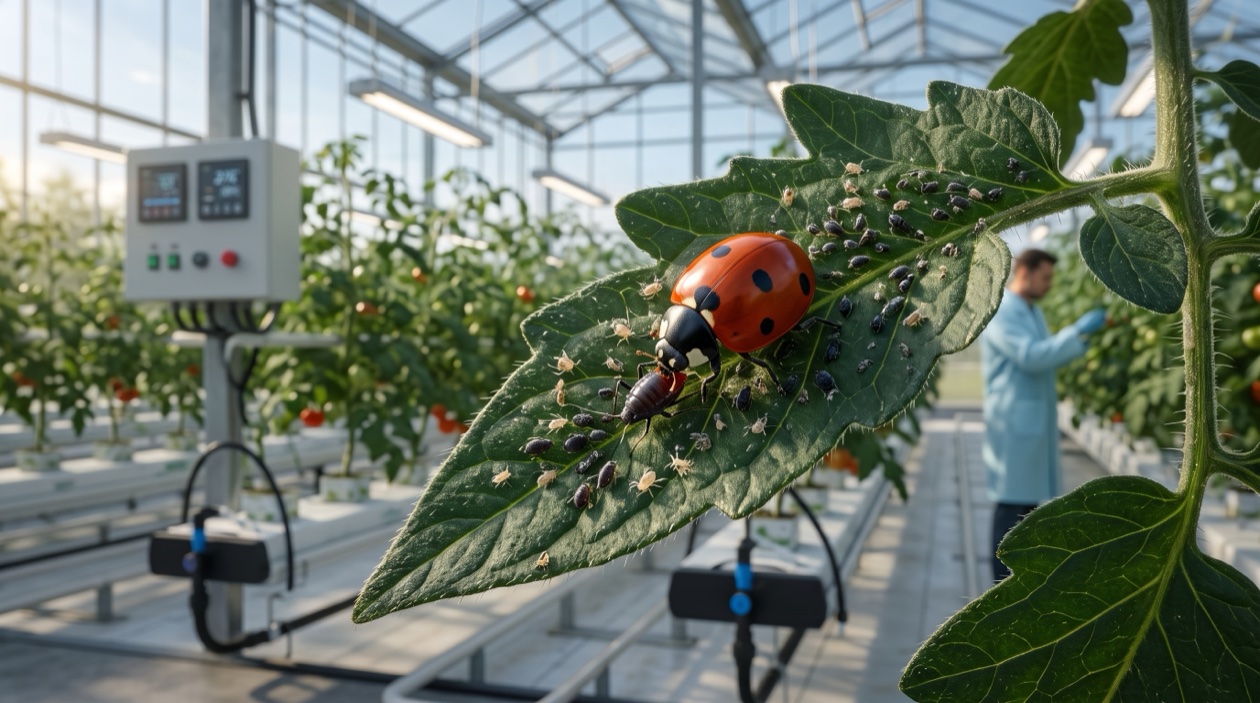
What do bumblebees do in a greenhouse?
Bumblebees are beneficial organisms that pollinate flowers under cover. Crops such as tomato can self-pollinate, but inside a closed greenhouse there is no wind and no natural bee traffic, so the flower needs vibration to release its pollen. A bumblebee grips the flower and vibrates it with its flight muscles, shaking the pollen loose. This “buzz pollination” is more natural than hand or hormone pollination, needs far less labour and produces better fruit quality.
The hollow, deformed or seedless fruit commonly seen with hormone pollination largely disappears with bumblebees. Because seed set is more even, fruit comes out large, full and well shaped, which directly raises the share of marketable quality in the fresh market.
Which crops use bumblebees?
By far the most common use is greenhouse tomato. Bumblebees are also used to support pollination in pepper, aubergine and strawberry, and in some fruit species. How critical hives are depends on the flower structure of the crop and its pollination requirement.
In tomato the practice has become close to standard, because under cover the alternatives either add a heavy labour burden or cost quality. The soundest way to think about bumblebees is as a natural part of the integrated pest management program you run in the greenhouse; when pollination and biological control are planned together, the house reaches a whole-system balance. I summarise how that whole is built on the biological control hub page. For practical steps on reducing the whitefly pressure that competes with this balance, see the whitefly biological control guide.
How many hives per decare?
There is no single fixed answer; hive numbers change with the crop, flowering density, season and greenhouse conditions. Peak flowering needs more bee power, while demand falls as flowering thins out. Bee activity drops in winter and under low light, so planning must account for that.
The right approach is therefore not to apply a figure from a table but to adjust hive numbers by observing flowering intensity and bee activity. Because hives have a limited working life, periodic replacement is also planned through the season. In my field work I set hive requirements by weighing greenhouse size and flowering status together, then update them during the season based on what I see.
When and how is the hive introduced?
Timing is the single most critical element of pollination success. The hive should be placed in the greenhouse as the first flowers begin to open. Introduced too early, the bees cannot find enough flowers and burn their strength; introduced too late, the first flowers pass unpollinated and yield is lost. The goal is for the bees to be active at the same time as the flowers.
A few practical rules apply to placement:
- Put the hive in shade, out of direct sun, where it will not overheat.
- Raise it slightly off the ground and keep the entrance clear and unobstructed.
- Keep it in a fixed position so bees can orient; do not move it around.
- Position the flight hole so bees disperse easily through the house.
How do you tell pollination is succeeding?
You do not need a microscope to see that bumblebees are working; you only need to look at the bite marks on the flowers. When a bee grips and vibrates a flower it leaves a brownish mark. The presence of those marks, and their increase over time, is the most reliable indicator that the hive is active and productive.
If routine checks show few or no bite marks, the hive may have weakened, weather may be suppressing the bees, or something applied in the greenhouse may have harmed them. In that case the cause is investigated and the hive reinforced if needed. Improved fruit set is an indirect but strong sign of success.
What protects bumblebee health?
The greatest enemy of the bumblebee is badly timed and badly chosen chemical spraying. A bee-toxic product can render a hive useless within hours and waste the whole investment. Throughout the pollination period, product choice must therefore be made with bee compatibility in mind.
Where an application is unavoidable, choose selective, bee-compatible products, time the application for when bees are least active, and if necessary close the hive temporarily and reopen it after the product’s safe interval. Rather than leaning on chemistry, the far more sustainable route is to push pest pressure down from the start with an integrated approach built on the beneficial insect release program. Pollination and pest management then run together inside the same balanced system.
Frequently asked questions
How many bumblebee hives are needed per decare?
Hive numbers vary with the crop, flowering density, season and greenhouse conditions. Rather than a single fixed figure, the right approach is to plan per grower by observing flowering intensity and bee activity.
When should the hive be introduced?
The hive goes into the greenhouse as the first flowers begin to open. Introducing it too early or too late reduces pollination efficiency; the aim is for the bees to be active at the same time as the flowers.
How do I know pollination is happening?
A bumblebee grips and vibrates the flower, leaving a brownish bite mark. Those marks, and a rise in fruit set, are the signs that the hive is working actively.
Can bumblebees and chemical sprays be combined?
Only with care. Bee-toxic products end pollination. Where spraying is unavoidable, choose selective bee-compatible products and, if necessary, close the hive temporarily and reopen it after the safe interval.
Get consultancy for biological control
A program tailored to your field, on-site trials and grower training. Message on WhatsApp for a first consultation.
Author
Ramazan Yıldırım
Senior Agricultural Engineer · Licensed to issue plant-protection prescriptions (Turkish Ministry of Agriculture)
Over 20 years of field experience advising growers across Türkiye and the Turkic states; founder of PR Tarım A.Ş. and Technical Director at Fernabio.
About Ramazan Yıldırım →