Biological Control
Beneficial Insect Release Program and Calendar
Published: February 14, 2026 · Updated: February 14, 2026
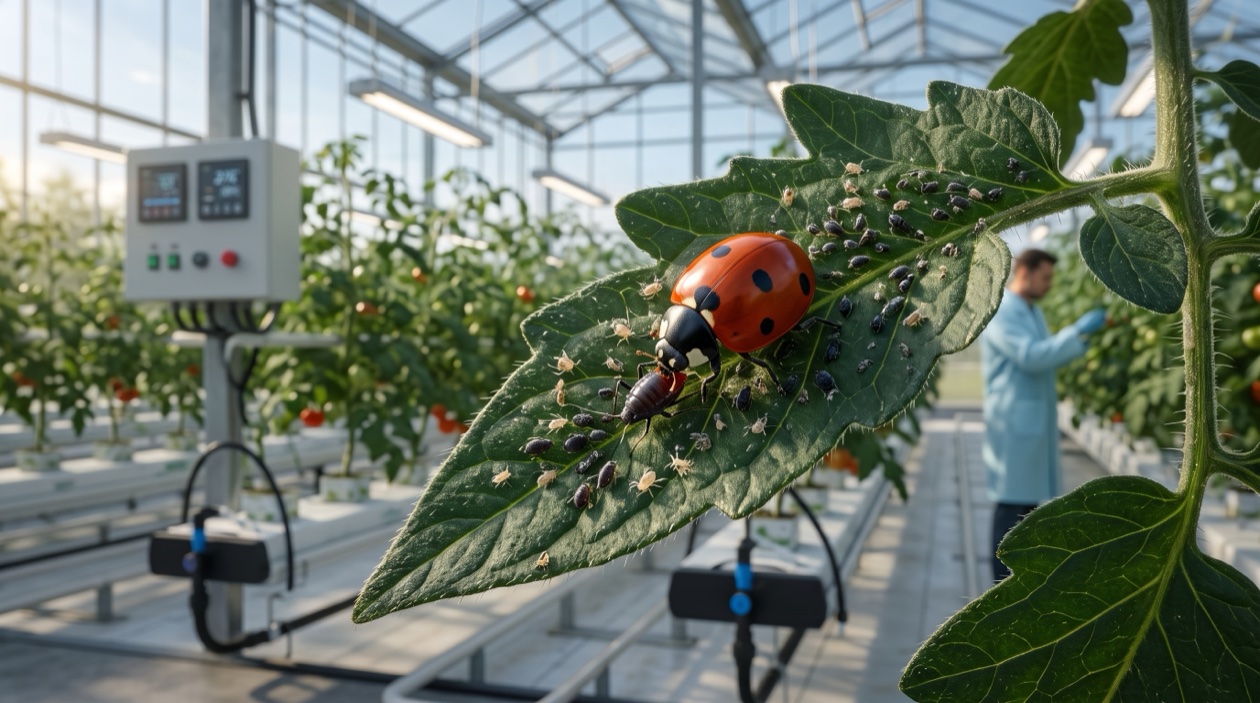
What is a beneficial insect release program?
A beneficial insect release program is the planned release of predator and parasitoid organisms into the greenhouse to suppress pests using their natural enemies. The aim is not to eliminate the pest but to hold it below the economic damage threshold in a sustainable balance. Unlike chemical control, it is not a one-off intervention but a living system managed across the season.
This program forms the backbone of biological control in greenhouses. Set up correctly, it lowers residues, prevents resistance and protects the beneficial population so the pest finds it harder to flare up again. Whitefly is typically the first pest the program must address; the specific strategies are covered in the whitefly biological control guide.
When should releases start?
The most critical rule of the program fits in one sentence: start early and preventively. The most common mistake I see in the field is a grower waiting until the pest is visible and only then trying to release beneficials. By that point the job has already become hard, because beneficials need time to multiply and catch up with the pest, and damage accumulates in the meantime.
The correct approach is to begin preventive release while pest pressure is very low or not yet visible. Beneficials released early establish themselves, multiply, and meet the pest at the very start. This needs fewer beneficials and makes the outcome far more reliable.
Which beneficial is chosen for which pest?
Every pest has its own natural enemies, so the program is built on accurate identification of the dominant pests in the house. The pests most often met under cover, and the beneficials commonly used against them:
- Whitefly: Encarsia formosa and Eretmocerus parasitoids suppress the population by parasitising whitefly larvae.
- Thrips: Amblyseius predatory mites (for example swirskii) and the predatory bug Orius feed on thrips larvae.
- Spider mite (two-spotted mite): the predatory mite Phytoseiulus persimilis is known for consuming spider mite rapidly. For species selection, release timing and monitoring methods see the spider mite biological control guide.
- Aphid: Aphidius parasitoids, along with lacewing and gall midge larvae, suppress aphid populations.
The combination of species matters as much as choosing the right one, because a greenhouse usually carries more than one pest at a time. The program arranges these species together, so they support each other, according to the crop and the pest profile.
How are release rate and frequency decided?
It would be wrong to give a single “so many per square metre” figure; the rate varies with pest pressure, crop, season and greenhouse conditions. What matters is repeated releases driven by monitoring data: beneficials are usually released not once but several times at set intervals until the population settles.
You start with low-rate preventive releases; if monitoring shows the pest rising, rate and frequency are increased. This dynamic management avoids unnecessary cost and protects the balance. In a house that also runs hive-based pollination, beneficial releases and bumblebee pollination must be planned to fit the same calendar.
How is the program monitored?
Without monitoring, biological control runs blind. The basic tools are yellow and blue sticky traps (for whitefly and thrips) and regular, systematic plant inspection. Weekly checks record both pest and beneficial populations. That record shows which way the balance is moving: is the pest rising, have the beneficials established, is there a new hotspot?
Monitoring data is the basis of release decisions. If trap counts are climbing, intervention is brought forward; if beneficial activity is strong, extra releases may be unnecessary. This feedback loop takes the program out of guesswork and grounds it in data.
How do chemical applications fit in?
Biological control does not have to exclude every chemical, but the products used must be compatible and selective. A broad-spectrum, persistent insecticide kills the released beneficials along with the target pest, collapsing the program and wasting weeks of work in a single application.
Sound management means using selective, short-persistence products that cause the least harm to beneficials, at the right time, and only when necessary. Before any application, the product’s effect on the beneficial species and its safe interval must be assessed. Chemistry then becomes not the enemy of the biological program but a complementary tool used when needed. For a release calendar and compatibility plan tailored to your greenhouse, biological control consultancy is available.
Frequently asked questions
When should releases start?
Releases should start early and preventively, while the pest population is still very low. Once the pest has exploded, it becomes far harder and more expensive for beneficials to restore the balance.
Which beneficial is used for which pest?
Encarsia and Eretmocerus parasitoids are common for whitefly, Amblyseius predatory mites and Orius for thrips, Phytoseiulus for spider mite, and Aphidius parasitoids and lacewing for aphid.
How many beneficials should be released?
Release rates vary with pest pressure, crop and greenhouse conditions. Rather than a fixed figure, what matters is repeated releases adjusted to the populations recorded on monitoring cards.
Why does monitoring matter so much?
Yellow and blue sticky traps and regular plant inspection let you see the pest and beneficial balance early. Without monitoring the program runs blind and problems go unnoticed until they are large.
Get consultancy for biological control
A program tailored to your field, on-site trials and grower training. Message on WhatsApp for a first consultation.
Author
Ramazan Yıldırım
Senior Agricultural Engineer · Licensed to issue plant-protection prescriptions (Turkish Ministry of Agriculture)
Over 20 years of field experience advising growers across Türkiye and the Turkic states; founder of PR Tarım A.Ş. and Technical Director at Fernabio.
About Ramazan Yıldırım →