Berries
Blueberry Nitrogen Fertilization Timing and Dosing
Published: October 20, 2026
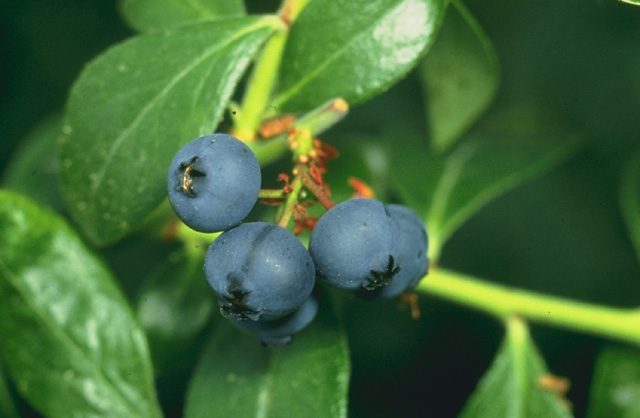
Blueberries (Vaccinium spp.) need far less nitrogen than most other fruit crops, yet the timing of each application matters as much as the total amount applied. In our field work across different blueberry plantings, the most common nitrogen mistake is applying the full seasonal dose in a single pass at the wrong time of year — often too late in spring or even in autumn. This article builds on the berries growing hub and digs into the specific timing and form decisions for blueberry nitrogen management.
Why do blueberries need a different nitrogen approach than other fruit crops?
Blueberries evolved in acidic, low-fertility soils where organic nitrogen is released slowly by microbial activity. Their ericoid mycorrhizal associations help them access nitrogen bound in organic matter — an adaptation that makes them efficient at low supply levels but sensitive to overload.
When nitrogen is supplied in excess, the plant shifts energy toward vegetative shoot growth at the expense of flower bud initiation and fruit set. In practice this means long, soft shoots, attractive foliage, and disappointing yields at harvest. Because blueberries’ rooting zone is shallow and fibrous, excess fertilizer also sits close to the roots where it can cause salt injury under low-rainfall conditions.
Nitrogen demand also changes with plant age and variety growth habit. Young plants establishing their root systems have different requirements from mature, full-bearing bushes. The framework below reflects general principles; a soil and leaf analysis is always the starting point for setting actual rates on any specific site.
What are the correct timing windows for applying nitrogen to blueberries?
Splitting nitrogen across the season serves two purposes: it matches supply to the plant’s shifting demand through the growing cycle, and it reduces the risk of nutrient leaching past the root zone during heavy rain or irrigation events.
First dose — from bud swell to early bloom: This is when the plant enters active growth and its demand for nitrogen begins rising. Applying before buds show visible movement risks the material remaining inactive in cold soil. A reliable field cue is the first signs of bud scale separation or leaf tip emergence; at that stage roots are actively absorbing and the timing is right.
Second dose — after petal fall to early fruit set: As fruit development begins, the plant’s nitrogen demand peaks. This application supports both the developing berries and the shoot growth that will carry next season’s flower buds. The dose should not be substantially larger than the first; favoring fruit set over excessive vegetative growth is the goal at this stage.
Optional third dose — during fruit swell: In intensive plantings or on sandy soils prone to leaching, a lighter third application can be made during the fruit-swell period. Crucially, this dose is carved out of the total seasonal allowance, not added on top. Applications must stop before harvest, and certainly before any early-autumn period that could trigger unseasoned new growth.
Blueberry soil preparation that establishes the correct acidic starting pH makes this timing more predictable across seasons: the rate at which ammonium is taken up depends heavily on soil pH and organic matter content, both of which good site preparation puts in place from the start.
Which nitrogen source is appropriate for blueberries?
Not all nitrogen fertilizers behave the same way in an acidic blueberry root zone, and the form matters considerably.
Ammonium sulfate is the most established choice in commercial blueberry production. The ammonium ion is directly usable by blueberry roots without the conversion step that nitrate requires, and as ammonium is nitrified by soil bacteria it leaves behind a slight acid reaction — an effect that helps maintain the low pH blueberries require. The sulfate component also provides sulfur, a secondary nutrient often present in adequate supply but worth monitoring on highly leached sandy soils.
Urea converts to ammonium in the soil and can be used in place of ammonium sulfate, but it carries a volatilization risk under warm, moist conditions when left on the surface. In our field observations, surface-applied urea performs much better when incorporated shallowly or applied just before irrigation — this drives the material into the root zone before ammonia gas can escape.
Nitrate-based fertilizers — calcium nitrate, potassium nitrate, and blended compound fertilizers with a significant nitrate fraction — are not well suited to blueberries. Beyond the uptake efficiency difference, nitrate drives soil pH upward over time, working against the acidic environment blueberries depend on.
For plantings that also contend with iron or manganese deficiency, it is worth reading the blueberry iron deficiency and chlorosis guide before adjusting the nitrogen program, since the two sets of symptoms can overlap and fixing one problem without addressing the other yields incomplete results.
How should a split-dose nitrogen program be planned in practice?
The starting point is always a current soil test. Organic matter content, current soil pH, and measured or estimated available nitrogen in the profile all feed into the decision about total annual rate. Leaf analysis from the previous season, if available, adds another layer of precision.
Once a total seasonal rate has been set — and these rates vary by region, soil, and plant age, so any number here would need to be adjusted to local conditions and analysis — the split across applications follows a practical rule of thumb: the largest portion goes to the first two windows (bud swell and post-bloom), with any optional third application being a smaller supplementary dose.
For plantings with a drip irrigation system, fertigation offers a practical alternative to dry broadcast applications. Delivering small doses at weekly or biweekly intervals through the drip lines places nitrogen precisely in the active root zone and allows the rate to be adjusted quickly if leaf color or growth rate signals a problem. The berry fertilization program covers the broader nutrient management calendar, including potassium, calcium, and boron alongside nitrogen, which is useful context for planning the full-season input schedule.
On heavy clay soils or sites with poor internal drainage, the leaching risk is lower but oxygen availability to roots may restrict uptake; on coarse sandy soils the reverse applies. Adjusting the dose and frequency to soil texture is one of the more site-specific decisions in blueberry nutrition management, and it is one of the reasons a general prescription number without site context is of limited usefulness.
Why does autumn nitrogen application carry significant risk?
The instinct to feed an exhausted-looking planting after harvest is understandable, but for blueberries it is one of the more costly mistakes a grower can make.
Blueberries enter a cold-hardening process in late summer and autumn that involves biochemical changes in shoot tissues — accumulation of cold-protective compounds, gradual lignification of shoot walls, and reduced growth activity. Nitrogen applied during this window interrupts the process by stimulating new cell division in shoot tips that lack the time to complete their hardening before the first frost. The result is soft, unprotected tissue that freezes readily.
The damage from poorly hardened shoots is not always visible immediately after the first frost; it often manifests as dieback that becomes apparent the following spring when affected canes fail to break dormancy or emerge weakly. In severe cases, a single autumn nitrogen application can set a planting back by one to two growing seasons.
The practical rule that comes out of this: once the last fruit is harvested, no further nitrogen applications are made until bud swell the following spring. The dormant plant has no mechanism to productively use new nitrogen, and the risk-to-benefit ratio is clearly unfavorable.
How can excess nitrogen symptoms be distinguished from other nutrient problems?
Identifying excess nitrogen in blueberries requires a bit of systematic observation, because some symptoms overlap with both deficiency states and with unrelated issues like water stress or root disease.
Dark, glossy green leaves are the most consistent early signal of excess nitrogen. On their own they are not cause for alarm, but paired with vigorous shoot elongation — shoots that are longer than typical for the variety and time of season, with thin stems relative to their length — they suggest the plant is channeling resources into growth at the expense of reproduction.
Low fruit set relative to apparent flower bud density is another flag. If the planting bloomed well but fruit numbers are lower than expected, and the foliage is lush, excess nitrogen is worth investigating. Similarly, delayed ripening — fruit that stays firm and pale longer than neighboring plantings of the same variety — can reflect an excess of vegetative activity prolonging the maturation cycle.
To confirm, a midsummer leaf analysis taken from the most recently fully expanded leaves provides a reliable nitrogen status reading. Comparing this against standard reference ranges for the variety and growth stage gives a clear basis for adjusting the following season’s program.
Frequently asked questions
Which nitrogen source is best for blueberries?
Ammonium sulfate is the most widely used choice. The ammonium form suits blueberries' acidophilic roots and has the added benefit of gradually lowering soil pH. Nitrate-based fertilizers should be avoided, as they can raise soil pH and impair nutrient uptake.
When should the first nitrogen dose be applied?
The first dose is applied between bud swell and early bloom — timing that varies by region and variety but typically falls in early spring. Soil temperature and visual bud-stage observation are the most reliable cues; applying too early means the material may sit inactive in cold soil.
Why is autumn nitrogen application harmful to blueberries?
Autumn nitrogen stimulates new vegetative shoot growth that cannot harden off before frost, significantly raising the risk of cold injury. Once harvest is complete, no further nitrogen applications are made until the following spring.
How many split doses should nitrogen be divided into?
Two to three doses per season is the common practice: bud swell, after petal fall, and optionally a lighter application during fruit development. The exact split depends on soil type, rainfall pattern, and analysis results — the total annual rate stays fixed regardless of how many applications are used.
What are the signs of excess nitrogen in blueberries?
Unusually dark green leaves, vigorous but thin-stemmed shoot growth, low fruit set, and delayed ripening can all indicate excess nitrogen. Leaf analysis taken in midsummer alongside a soil test gives the most reliable confirmation.
Get consultancy for berries
A program tailored to your field, on-site trials and grower training. Message on WhatsApp for a first consultation.
Author
Ramazan Yıldırım
Senior Agricultural Engineer · Licensed to issue plant-protection prescriptions (Turkish Ministry of Agriculture)
Over 20 years of field experience advising growers across Türkiye and the Turkic states; founder of PR Tarım A.Ş. and Technical Director at Fernabio.
About Ramazan Yıldırım →