International Agriculture
Kyrgyzstan Agricultural Inputs Market Overview
Published: October 14, 2026
What structural factors define Kyrgyzstan’s agricultural market?
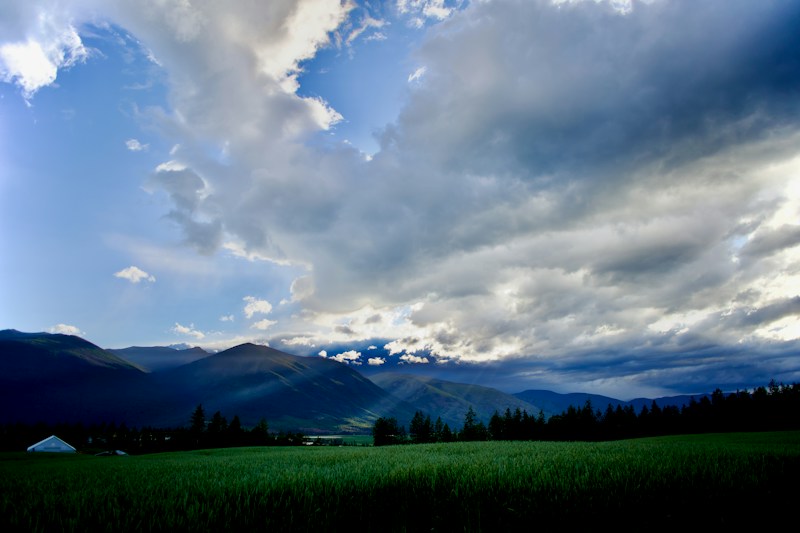
Kyrgyzstan is the smallest and most mountainous of the five Central Asian countries. Roughly 7% of its territory is arable, but the Chu valley in the north and Kyrgyzstan’s share of the Fergana valley in the south host productive farming landscapes. The country’s largely rural population depends significantly on agriculture for livelihoods, and the sector receives ongoing government attention for food security reasons.
Livestock is the traditional backbone: sheep and cattle rearing, with extensive mountain pasture grazing, dominates the highland economy. In crop production, wheat is the primary food-security staple; barley, potatoes, and sugar beet follow. Over the past decade, the segment that has shown the most dynamic growth is covered horticulture and fruit production in the lower valleys — high-tunnel vegetable growing, orchard expansion, and some greenhouse investment, particularly around Osh in the Fergana valley corridor.
This growth creates demand for specialised inputs that was largely absent in the traditional crop and livestock economy: hybrid seeds, water-soluble fertilisers, irrigation equipment, and crop protection products suited to intensive cultivation. An overview of how this pattern compares across the region is covered in the international agriculture consultancy section.
How does EAEU membership shape market competition?
Kyrgyzstan joined the Eurasian Economic Union (EAEU) in 2015, alongside Russia, Kazakhstan, Belarus, and Armenia. The practical implication for agricultural input trade is significant: goods from Russia and Kazakhstan enter Kyrgyzstan at zero or minimal tariffs, giving those countries a substantial price advantage in commodity input categories such as bulk fertilisers and standard agricultural chemicals.
For Turkish and European suppliers, this means that competing on price alone in commodity categories is structurally difficult. The path to market viability runs through product categories where technical differentiation outweighs raw price: hybrid seeds where yield premium justifies the cost, specialised water-soluble fertilisers for fertigation programmes, biological pest control agents, and covered-crop equipment.
Kazakhstan’s geographic proximity adds competitive pressure beyond tariffs: regional distributors, supply chains, and established trade relationships allow Kazakh-supplied products to reach Kyrgyz buyers through well-worn logistics corridors. A comparative view of the Kazakhstan market is available at the Kazakhstan agricultural inputs page.
Which input categories offer the best entry opportunities?
Hybrid vegetable and fruit seeds are the clearest growth category. The expansion of protected horticulture in the Fergana and Chu valleys creates demand for high-yielding hybrid varieties whose performance premium justifies a higher price than open-pollinated alternatives. This is a technically-driven sale: demonstration of variety performance under local conditions, combined with agronomic guidance, is the sales method that works.
Water-soluble fertilisers and fertigation products follow drip irrigation system expansion. As growers transition from broadcast fertiliser application to fertigation, they require new product formulations and the agronomic knowledge to use them. Combining product supply with technical training creates customer loyalty that commodity fertiliser suppliers cannot replicate.
Protected horticulture equipment: demand for high-tunnel systems, shade netting, passive and active ventilation, and basic climate management is growing alongside the greenhouse sector itself. This segment requires after-sales technical service and local support capacity to maintain customer relationships through installation and first-season operation.
Biological crop protection: awareness is building among covered-crop producers frustrated by insecticide resistance in common pest species. Product efficacy demonstration and technical field support are prerequisites for adoption; this category rewards early market entrants who invest in reference farmer programmes.
What is the practical competitive position for Turkish firms?
Turkish companies hold a moderate cultural proximity advantage in Kyrgyzstan — more than Chinese or European firms, less than in Azerbaijan or Turkmenistan where linguistic intelligibility is stronger. Russian is the functional business language; firms without Russian-language capability or reliable local translation will face real communication barriers in institutional and technical contexts.
The more decisive competitive factors are technical: product quality, field performance, after-sales agronomic support, and the ability to train growers in new techniques. In Kyrgyzstan’s growing horticulture sector, a grower who adopts a hybrid variety or fertigation programme wants to understand how to manage it season-on-season — suppliers who provide that ongoing connection build durable customer relationships that price competitors struggle to displace.
What are the practical market entry steps?
Local distributor or representative: While not as structurally required as in Turkmenistan, a local partner meaningfully accelerates product registration, import handling, and regional sales. Bishkek-based firms with agricultural sector connections are a practical starting point; the Turkish Embassy’s commercial counsellor office can provide introductions.
Product registration: Fertilisers and plant protection products are subject to formal registration with Kyrgyz agricultural authorities. Requirements change periodically; working with a local adviser familiar with current procedures avoids costly delays.
Demonstration priority: On-farm results are the primary driver of adoption decisions across Central Asian markets. Investing in small, well-documented demonstration trials in the Fergana or Chu valleys — ideally with respected local reference farmers — generates credibility and market awareness that no promotional spend can match.
Seasonal timing: The Chu valley main planting season starts March-April; the Fergana valley slightly earlier, February-March. Coordinating market visits, training events, and demonstration launches with planting windows maximises farmer engagement.
Long-term horizon: Like all Central Asian agricultural markets, Kyrgyzstan rewards patience. First-year volume will be modest; the foundation built through demonstration work, partner development, and technical service in years one and two translates into sustainable market share from year three onward.
Frequently asked questions
What are the dominant crops and livestock in Kyrgyzstan?
Livestock — sheep, cattle, and horses — accounts for the largest share of agricultural output, particularly in highland regions. In crop production, wheat is the primary grain for domestic food security, alongside barley, potatoes, and sugar beet. Fruit (apricots, plums, grapes) and protected-cultivation vegetables are expanding in the Fergana valley and Chu lowlands.
How does EAEU membership affect competition in this market?
Kyrgyzstan joined the Eurasian Economic Union in 2015, granting zero or very low tariff access to inputs from Russia and Kazakhstan. This gives their fertiliser and agricultural chemical products a significant price advantage over Turkish or European alternatives. Turkish firms are most competitive in specialised, technical-value products — hybrid seeds, water-soluble fertilisers, biological crop protection — where differentiation outweighs price.
Is there a language advantage for Turkish firms?
Kyrgyz is a Turkic language but mutual intelligibility with Turkish is lower than with Azerbaijani or Turkmen. Russian serves as the practical business language. Turkish firms have a cultural proximity advantage over Chinese or European competitors, but this is more limited than in Azerbaijan or Turkmenistan; technical capability and product performance are the dominant competitive factors.
Which input categories show the strongest growth potential?
Hybrid vegetable and fruit seeds, water-soluble fertilisers for fertigation, protected horticulture equipment (high tunnels, climate management), and biological crop protection products are the categories with visible demand growth. These segments are driven by the expansion of greenhouse and orchard production in the Fergana and Chu valleys.
Is a local distribution partner necessary?
Less structurally mandatory than in Turkmenistan, but a local distributor or representative still significantly accelerates product registration, import procedures, and regional distribution network setup. Bishkek-based trading companies with agricultural sector links are a practical starting point.
How does Kyrgyzstan compare with Kazakhstan or Uzbekistan for market entry?
Kyrgyzstan is smaller and less formalised than Kazakhstan; the market is more accessible but thinner in absolute volume. Compared to Uzbekistan, it is less populated and moves more slowly in agricultural modernisation, but also has fewer entrenched foreign competitors in specialised input categories.
What regions are the main agricultural focus areas?
The Chu valley (around Bishkek) and Kyrgyzstan's portion of the Fergana valley (Osh and Jalal-Abad provinces) are the primary crop production areas. Bishkek is the commercial and institutional hub. Northern highland regions are dominated by extensive livestock grazing with limited crop production.
Get consultancy for international agriculture
A program tailored to your field, on-site trials and grower training. Message on WhatsApp for a first consultation.
Author
Ramazan Yıldırım
Senior Agricultural Engineer · Licensed to issue plant-protection prescriptions (Turkish Ministry of Agriculture)
Over 20 years of field experience advising growers across Türkiye and the Turkic states; founder of PR Tarım A.Ş. and Technical Director at Fernabio.
About Ramazan Yıldırım →