Industrial Hemp
Hemp Harvest and Drying Management
Published: August 31, 2026 · Updated: September 8, 2026
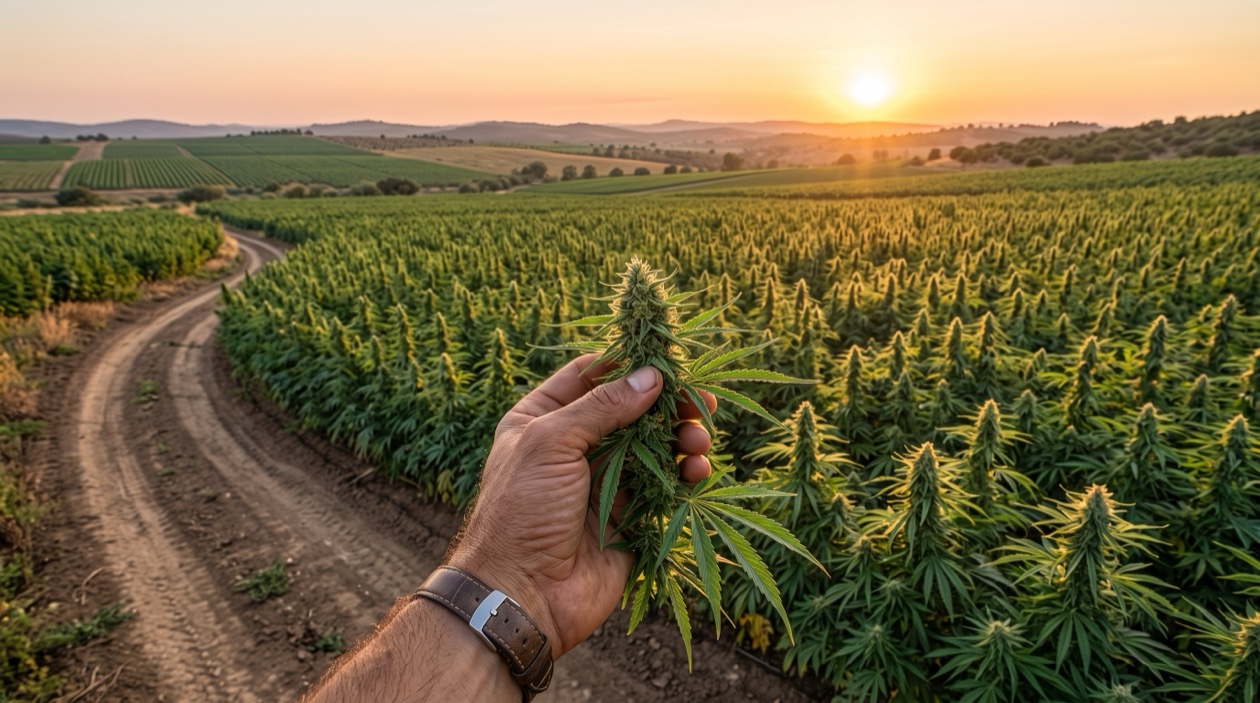
How does harvest timing depend on the end use?
There is no single correct harvest date for industrial hemp — the optimum window depends on what the crop is being grown for. For an overview of all hemp production topics see the hemp hub page.
Fibre production: Cutting at the onset of male pollen release or just at early female flowering captures fibre at its best. This window is typically the first one to two weeks after flowering begins.
Seed production: Colour change and hardening of seeds signals physiological maturity. Harvesting before significant shattering is essential on large areas; sequential cutting of different sections of the field is a practical approach.
Flower (CBD) production: Trichome monitoring is the guide. A jeweller’s loupe or portable microscope is the practical tool. The window between milky-white and beginning-amber is the target; individual growers set the exact timing based on product specification.
Which cutting method should you choose?
Hand cutting: Best for small plots and flower production. Minimum loss and mechanical damage, but labour-intensive.
Binder-harvester: Standard for fibre and seed. Cuts and bundles the stem for field retting or transport. Header height and reel speed adjusted for crop density.
Combine: Used at scale for seed harvest. Cylinder speed, concave clearance and sieve settings must be optimised to minimise seed cracking.
How does drying affect quality and legal compliance?
Post-harvest drying is where fibre, seed and flower crops take very different paths.
Field retting (fibre): Cut stalks are left lying in the field for controlled microbial breakdown of the pectin binding fibres to the core. Duration depends on weather — too wet and retting over-runs; too dry and it stalls. Timing and turning of swaths matters.
Controlled drying (flower): Temperature, humidity and airflow are managed in a dedicated drying room. Mould is the primary risk; visual inspection and humidity monitoring are built-in routines. Food or pharmaceutical-grade protocols require documented temperature and humidity logs.
Legal note: In Turkey, THC testing before and at harvest is required for licensed hemp production. Drying conditions affect analytical outcomes; standardised sampling and chain of custody are part of compliance, not an afterthought. The compliance obligations that start with the permit are summarised in the cultivation permit guide. For pest pressure management leading up to harvest, see hemp pest and disease management.
Frequently asked questions
How is harvest timing determined for fibre hemp?
For fibre quality, the optimal harvest window is at the onset of flowering — when male plants begin shedding pollen and female plants show their first flowers. Fibres are at their longest and most workable at this stage. Left too long, fibres lignify, shorten and become difficult to process.
What happens if seed harvest is delayed?
Hemp seed begins to shatter once it reaches physiological maturity. Seed loss from shattering both reduces yield and leaves viable seed on the ground, creating a volunteer problem in the following season. Monitoring seed colour change and moisture content triggers the harvest decision.
How is harvest timed for flower production?
In flower (CBD) production, trichome observation is the primary guide. Clear trichomes indicate immaturity; milky-white trichomes signal peak; amber trichomes mean peak has passed. The harvest window can be as narrow as 5-14 days. Hand harvesting or careful mechanical cutting preserves trichome integrity.
Why do drying conditions affect quality and compliance?
Fast drying at high temperatures drives off terpenes rapidly, diminishing aroma and extract quality. Too-slow drying in humid conditions creates mould risk and can render the crop unusable. Ideal drying conditions are 15-21°C and 45-55% relative humidity with good air circulation. For fibre, field retting is a distinct process.
Can THC levels shift after harvest?
Yes. Poor drying conditions or extended storage can trigger degradation pathways — including partial conversion of CBD to THC under certain conditions. Temperature management during drying affects analytical results. For legal compliance, sampling protocol, timing and conditions should be standardised.
Get consultancy for industrial hemp
A program tailored to your field, on-site trials and grower training. Message on WhatsApp for a first consultation.
Author
Ramazan Yıldırım
Senior Agricultural Engineer · Licensed to issue plant-protection prescriptions (Turkish Ministry of Agriculture)
Over 20 years of field experience advising growers across Türkiye and the Turkic states; founder of PR Tarım A.Ş. and Technical Director at Fernabio.
About Ramazan Yıldırım →