Industrial Hemp
Hemp Fertilization and Plant Nutrition Program
Published: February 10, 2026 · Updated: August 31, 2026
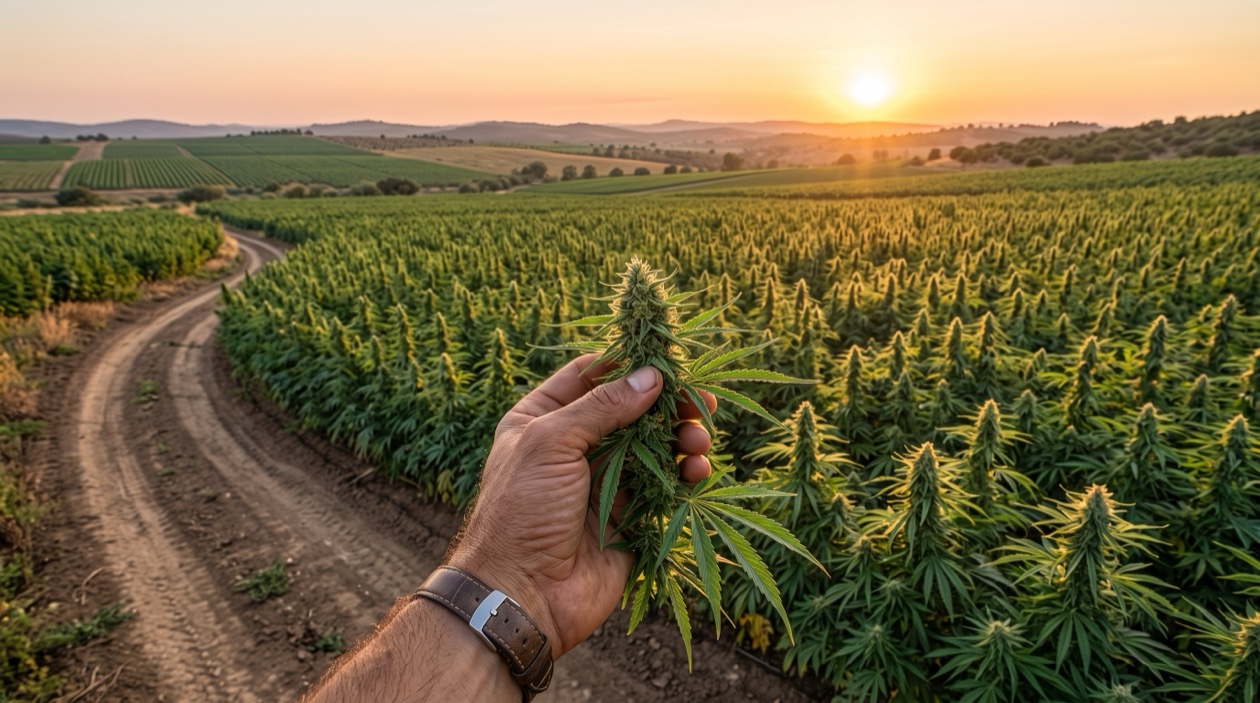
Why does hemp fertilization start with soil analysis?
Correct nutrition in hemp cannot be built without soil analysis. Analysis reveals soil pH, organic matter content, salinity and the status of available nitrogen, phosphorus and potassium along with micronutrients. In our field work we often see growers who apply fertilizer by looking at the neighbouring field, without analysis, either under- or over-feeding. Both raise cost: under-feeding lowers yield, while over-feeding wastes money and increases lodging and disease risk.
The first step is to take representative soil samples from different points in the parcel a few weeks before sowing and send them to an accredited laboratory. Once the results are in hand, the fertilization program is built around your target (fibre, seed or flower), the characteristics of the variety and the current state of the soil. We cover pre-sowing levelling and drainage in detail in soil preparation for hemp.
Which nutrients does hemp need?
Hemp is a fast-growing crop that produces high biomass in a short period, so it demands balanced and timely feeding. The roles of the three main nutrients:
- Nitrogen (N): the engine of vegetative growth and stem elongation. Demand is high, but excess is dangerous: too much nitrogen lodges the crop, weakens the stem, lowers fibre quality and delays seed maturity.
- Phosphorus (P): needed for root development, early vigour and seed formation. It is usually applied pre-sowing as base fertilizer.
- Potassium (K): supports stem strength, water balance and seed filling, and increases tolerance to stress and disease.
Alongside these, secondary elements such as calcium, magnesium and sulphur, and micronutrients such as zinc, boron, iron and manganese, can be critical at particular stages. Deficiencies usually show symptoms on the leaf, but it is sounder to act on analysis and observation together rather than on symptoms alone.
How is the nitrogen rate set, and why is it split?
Applying all the nitrogen in one pass before sowing is a common mistake in hemp. Part of a high dose given while the plant is still small leaches below the root zone and is wasted, and sudden excessive vegetative growth increases lodging risk. Applying nitrogen in split doses is more efficient.
In practice, part of the nitrogen goes on as base fertilizer and the remainder is applied during the rapid stem elongation period as a topdressing, or through fertigation where drip irrigation is installed. The exact amount depends on soil analysis and on the target, which is why this article explains the method rather than quoting a single “kg per decare” figure. The precise rate for your own parcel must be set together with your analysis result. For a program tailored to your field, look at the other guides on the hemp hub page or get in touch for consultancy.
How is fertigation applied in hemp?
On parcels with drip irrigation, fertigation (fertilizing through the irrigation water) delivers nutrients to the root zone in small, frequent doses, raising both fertilizer efficiency and control. Its advantage is that the nutrient ratio can be adjusted weekly to the growth stage: nitrogen-weighted early on, shifting towards potassium as flowering and seed filling approach.
Points to watch in fertigation are monitoring water EC and pH, preventing emitter blockages and preparing the fertilizer solution correctly. On parcels without a system, feeding is carried out by incorporating solid fertilizers well into the soil and washing topdressings in with rainfall or irrigation. We cover how to tune EC and pH across growth stages in detail in fertigation EC and pH management.
What harm does over-fertilization do?
The idea that “more fertilizer means more yield” is wrong in hemp and expensive. Excess nitrogen lodges the crop, softens the stems, complicates harvest and lowers fibre quality. Excessive vegetative growth also creates a dense canopy that holds moisture, preparing the ground for fungal disease and pest pressure. Uncontrolled use of high-salinity fertilizers can cause root burn and salt accumulation in the soil.
The right approach is balance according to the target: for fibre production, a nitrogen-potassium balance that gives long, strong stems; for seed production, an emphasis on phosphorus and potassium that supports seed filling. Where pest pressure rises, integrating biological control approaches before leaning on chemistry is also worth considering.
Who should prepare the fertilization program, and how?
The soundest program is built by assessing soil analysis, parcel history, target product and variety characteristics together. What was grown in the same field the previous year, irrigation capability, climate conditions and the harvest target all affect the program directly. Rather than an off-the-shelf recipe that “fits every field”, a parcel-specific plan is essential.
In my field work I build the fertilization program in three stages: first I clarify the analysis and the target, then I set the base plus split feeding calendar, and finally I update the program through the season with observation and, where needed, leaf analysis. Nutrition in hemp should be seen not as something set up once and forgotten but as a process managed across the season.
Frequently asked questions
How much nitrogen does hemp need?
Nitrogen demand varies with the current state of the soil, the target (fibre or seed) and the variety. The exact figure comes out of soil analysis; because excess nitrogen causes lodging and quality loss, split doses are preferred.
When is hemp fertilized?
Base fertilization goes on during pre-sowing soil preparation, while part of the nitrogen is applied as a topdressing or through fertigation, split across the rapid stem elongation period. Timing is set by growth stage and irrigation system.
Can fertilizer be applied without soil analysis?
It is not advisable. Fertilizing without analysis risks both under- and over-feeding. An application made without seeing pH, organic matter and nutrient status can waste both money and yield.
Does foliar feeding work in hemp?
Foliar feeding can support the crop through micronutrient deficiencies and stress periods. But foliar fertilizer does not replace the main feeding from the soil; it complements it.
Get consultancy for industrial hemp
A program tailored to your field, on-site trials and grower training. Message on WhatsApp for a first consultation.
Author
Ramazan Yıldırım
Senior Agricultural Engineer · Licensed to issue plant-protection prescriptions (Turkish Ministry of Agriculture)
Over 20 years of field experience advising growers across Türkiye and the Turkic states; founder of PR Tarım A.Ş. and Technical Director at Fernabio.
About Ramazan Yıldırım →