Berries
Blueberry Variety Selection by Climate Group
Published: September 29, 2026
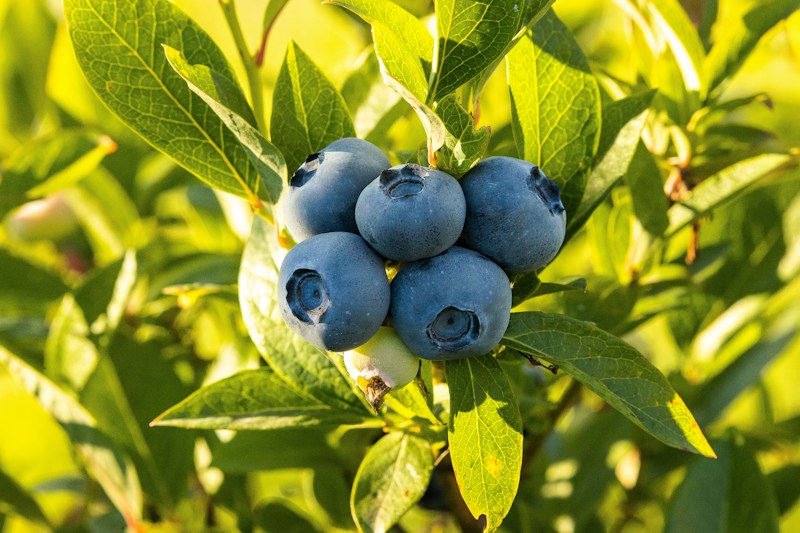
The most common orchard establishment mistake we see in the field is selecting a blueberry variety before checking whether the climate can support it. The plants are installed, the soil is prepared — yet years pass and the orchard never delivers what was expected. More often than not, the variety itself is not at fault: the problem is that the chosen group’s chilling-hour requirement does not match the site’s winter profile. This article covers the three main blueberry groups — northern highbush, southern highbush and rabbiteye — from the standpoint of climate fit, soil compatibility and cross-pollination requirements.
How Do the Groups Differ in Chilling-Hour Requirement?
Blueberries and other temperate fruit crops complete dormancy by accumulating cold hours through winter. Once the required accumulation is reached, the plant flowers uniformly and on schedule. When chilling is insufficient, flowering is irregular and scattered, fruit set falls, and berries ripen unevenly.
Northern highbush (Vaccinium corymbosum) cultivars were selected for long, cold winters. Depending on the cultivar, chilling requirements typically range from 800 to 1,200 hours below 7°C. Sites that can reliably deliver this range include higher-elevation inland areas and regions with consistently cold winters. The key word is “reliably”: chilling accumulation varies from year to year, and a group-match decision should be based on the worst years as much as the average.
Southern highbush cultivars are interspecific hybrids developed specifically to reduce chilling requirements, making them viable in mild and warm climates. Most southern highbush varieties require 150–400 chilling hours depending on the cultivar. Coastal lowlands with mild winters, Mediterranean-type climates and subtropical-fringe areas are the primary candidates for this group.
Rabbiteye (Vaccinium virgatum, formerly V. ashei) is botanically a distinct species. Its chilling requirement generally falls between 300 and 600 hours, placing it in an intermediate position. What sets rabbiteye apart from the highbush groups is its tolerance of summer heat and drought. In field work we have seen rabbiteye maintain acceptable production under irrigation shortfalls that would sharply reduce yield in northern or southern highbush plantings.
How Does Cross-Pollination Requirement Differ by Group?
Pollination is one of the most frequently overlooked factors in blueberry establishment, yet its effect on yield is immediate and measurable. In our field observations, single-variety rabbiteye plantings regularly produced minimal fruit or very small berries; the same plants next to a different variety produced normal crops.
Rabbiteye is largely self-incompatible. Even in a large block of the same variety, pollen from one flower does not reliably fertilise another flower on the same plant or on neighboring plants of the same cultivar. A different rabbiteye variety — one with an overlapping bloom period — is not optional; it is a structural requirement of the orchard. Planting at least two, preferably three, rabbiteye varieties with overlapping bloom windows is the minimum viable design.
Northern and southern highbush cultivars are partially self-fruitful, meaning a single-variety block will produce some crop. However, field data consistently shows that mixed plantings of two or more compatible varieties improve both fruit set percentage and individual berry weight. A well-designed two-variety highbush block is not a compromise; it is better orchard management.
Bee access during bloom is also essential across all groups. A hive positioned at the orchard edge during flowering provides a measurable yield boost in both highbush and rabbiteye plantings, particularly where natural pollinator populations are low.
What Soil pH Does Each Group Need?
All blueberry groups are acid-loving plants, but the tolerated pH range differs between groups. Northern and southern highbush cultivars perform best at pH 4.5–5.2. Above pH 5.5, iron and manganese uptake is impaired; leaf yellowing (interveinal chlorosis) appears, first on new growth, and worsens each season as roots expand into higher-pH subsoil. Correcting pH after establishment is slow and costly.
Rabbiteye tolerates a slightly broader range, approximately pH 5.0–6.0, because of differences in root physiology and mycorrhizal associations. This wider tolerance can make rabbiteye a more practical choice on soils that are not naturally strongly acidic and where achieving pH below 5.0 would require large sulphur applications over several years.
Regardless of group, the decision should be based on an actual soil test, not a regional assumption. Testing at multiple depths — the top 20 cm and the 20–40 cm horizon — is advisable because subsoil pH often differs from the surface and blueberry roots eventually reach both. For detail on soil preparation and pH management, see our blueberry soil preparation guide.
How Should Variety Group Be Matched to Location?
Location assessment for blueberry group selection involves two concrete data points: chilling accumulation and soil pH. Both should be in hand before a group decision is made.
For chilling-hour estimation, hourly temperature data from the nearest weather station over the past five to ten winters provides a reasonable range. Count hours below 7°C from roughly the first sustained cold period in autumn through to the end of winter. Focus on the low-accumulation years, not the averages: the question is which group’s requirement can still be met in a poor chilling year.
In Mediterranean and warm temperate climates with mild winters, southern highbush is the starting point. Where summer rainfall is low and irrigation infrastructure is limited, rabbiteye becomes the stronger candidate. Where winters are reliably cold and the site is above a certain elevation, northern highbush varieties become viable — though late-spring frost risk must still be evaluated separately.
One practical approach in locations that fall into a grey zone between groups is to run a small comparison trial with a few individuals of two different groups before committing to full-scale establishment. Three or four growing seasons of data from the specific site — not regional trial data — is worth more than any generalisation.
How Should Variety Count and Pollination Layout Be Planned?
After choosing a group, the next question is how many varieties to include and how to arrange them in the orchard. For rabbiteye this question is non-negotiable; for highbush groups it is a strong agronomic recommendation.
A commonly used layout in commercial rabbiteye plantings is to designate 60–70% of rows to the primary commercial variety and distribute one or two pollinator varieties throughout, rather than concentrating them at one end. Rows alternate or interleave so that no flowering plant is more than one or two rows away from a different variety. This arrangement gives pollinators short travel distances between varieties and maximises overlap during bloom.
Pollinator variety selection is as important as the primary variety. The pollinator must flower at the same time as or slightly after the primary variety to ensure pollen is available when the primary is receptive. Nursery catalogues and trial station data typically specify bloom timing as early, mid or late season; matching primary and pollinator in the same or adjacent window is the operating rule.
For northern and southern highbush, two varieties with complementary bloom timing is the practical minimum. A third variety extends the pollination window and slightly staggers harvest, which can reduce labour pressure at peak picking.
What Other Factors Should Be Evaluated Before Finalising the Group?
Chilling hours and soil pH are the two anchoring criteria, but several secondary factors refine the final variety choice within a chosen group.
Harvest timing: In fresh market production, early-season varieties command higher prices if your market window supports it. Late-season varieties extend the harvest period and spread labour. Group determines the approximate season window (northern highbush is generally later than southern highbush in comparable climates), but variety determines the exact timing within that window.
Disease susceptibility: Mummified berry disease (Monilinia), stem canker (Botryosphaeria) and root rot (Phytophthora) are the most economically significant diseases in blueberry. Some varieties within each group carry better tolerance to specific pathogens. Where one of these diseases has been a recurring problem in the area, variety resistance ratings from regional trial data are worth examining.
Fruit characteristics: Berry size, firmness, scar diameter (the picking scar left when the berry detaches) and shelf life vary among varieties within the same group. Fresh-market buyers often specify minimum berry size and firmness standards; matching the chosen variety’s typical performance to those standards before planting avoids a structural mismatch between what the orchard produces and what the market requires.
How Do Group Selection and Establishment Connect?
Choosing the right variety group is the first decision in orchard establishment, but it connects directly to soil preparation, row spacing, trellis requirements and irrigation planning. For a practical overview of how these decisions fit together, the berries grower’s guide brings the full sequence into one place.
Specific detail on pruning and canopy management — which also differs in emphasis between groups — is covered in the blueberry pruning timing guide. A well-matched variety group and a correctly managed canopy are the two foundations that determine whether a blueberry orchard reaches its productive potential by year four or five, or spends that time recovering from a mismatched start.
Frequently asked questions
What is the main difference between blueberry variety groups?
The most decisive difference is chilling-hour requirement. Northern highbush cultivars need cold winters with high chilling accumulation; southern highbush hybrids are bred for mild and warm climates with low chilling; rabbiteye is a separate species with intermediate chilling needs and greater heat and drought tolerance. Soil pH tolerance also differs between groups.
What is a chilling hour and how is it counted?
A chilling hour is each hour of air temperature below 7°C (45°F) accumulated during the winter dormancy period. Plants need a minimum accumulation to complete dormancy and flower uniformly. Accumulation varies substantially by location, elevation and year; the most reliable data comes from local weather station records or agronomic advisors — not regional averages.
Why do rabbiteye blueberries need two varieties?
Rabbiteye (Vaccinium virgatum) is largely self-incompatible; pollen from the same variety does not reliably fertilise its own flowers. Planting at least two different rabbiteye varieties with overlapping bloom periods noticeably improves fruit set and berry size. Northern and southern highbush cultivars are partially self-fruitful, but cross-pollination still improves yield and fruit weight in both groups.
Does soil pH affect which blueberry group to plant?
Yes. All blueberry groups prefer acidic soil, generally pH 4.5–5.5. Northern and southern highbush perform best in the narrower range of pH 4.5–5.2. Rabbiteye tolerates slightly higher acidity, around pH 5.0–6.0, which can make it a lower-amendment option on soils that are not naturally very acidic. Planting without a soil test routinely leads to iron deficiency chlorosis that worsens each season.
Which group suits warm, dry summer climates?
Rabbiteye is the most heat- and drought-tolerant group and is the first choice where summer irrigation is limited or where temperatures routinely exceed 35°C. Southern highbush cultivars also tolerate warm winters but generally need consistent moisture during the growing season. Northern highbush performs poorly in climates with hot summers and insufficient chilling.
How many varieties should be planted together?
For rabbiteye, a minimum of two varieties with overlapping bloom is required; three varieties improves pollination reliability further. A common approach is to plant 60–70% of rows in the primary commercial variety and distribute one or two pollinator varieties throughout. For northern and southern highbush, two complementary varieties is also the practical recommendation even though single-variety plantings can produce some fruit.
Get consultancy for berries
A program tailored to your field, on-site trials and grower training. Message on WhatsApp for a first consultation.
Author
Ramazan Yıldırım
Senior Agricultural Engineer · Licensed to issue plant-protection prescriptions (Turkish Ministry of Agriculture)
Over 20 years of field experience advising growers across Türkiye and the Turkic states; founder of PR Tarım A.Ş. and Technical Director at Fernabio.
About Ramazan Yıldırım →