Berries
Bird Damage Prevention in Berry Crops: Netting Guide
Published: October 2, 2026
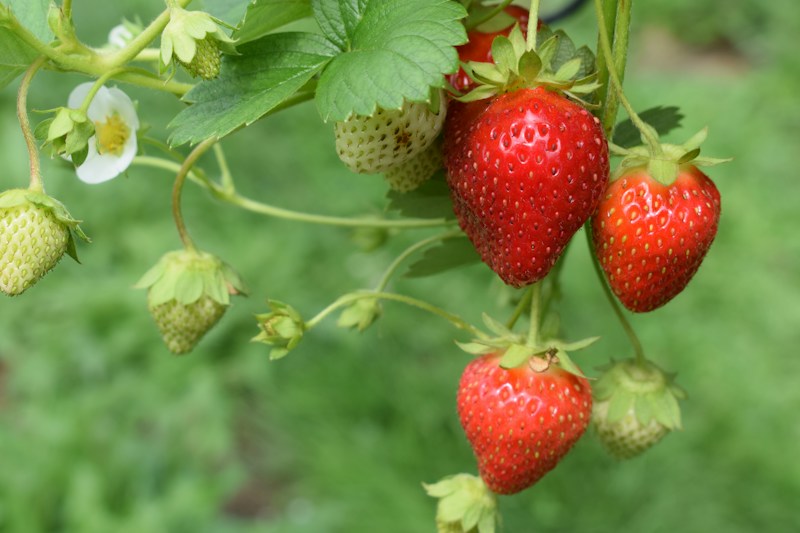
Bird damage is one of the most frustrating problems in berry production — losses often appear overnight, concentrated in the few days when fruit reaches peak ripeness. In our field work, we have found that farms without netting protection consistently lose a meaningful share of their harvest to birds, particularly in plots close to woodland or water. This guide covers how to choose the right netting system, when to put it up, and how to keep it working season after season. For a broader view of berry crop management, visit our raspberry and blackberry growing hub.
How serious can bird damage become in a berry planting?
The severity of bird pressure varies by plot location, local bird population density and the duration of the ripening window, so it is not possible to give a fixed loss figure that applies everywhere. What we consistently observe in the field is that unprotected plots near woodland or wetland edges face sustained flocks of starlings, sparrows and thrushes once fruit colour begins. Raspberries and blackberries — with their bright pink-to-red colour range — are among the most attractive targets. Blueberries draw strong pressure as soon as the characteristic blue-purple blush develops.
The actual loss goes beyond the volume that birds eat. Birds knock fruit to the ground, peck partially into berries and leave them unmarketable. More importantly, the wounds they open on fruit skins are entry points for Botrytis cinerea (grey mould) and other fungal pathogens. Secondary fungal infections triggered by bird damage can ultimately reduce marketable yield more than the direct pecking itself. Keeping this in mind, protecting fruit from bird damage is not only a volume issue — it is also a fruit quality and disease management consideration.
What netting material and mesh size should you choose?
Most anti-bird nets on the market are made from HDPE (high-density polyethylene) or PP (polypropylene). Both materials offer adequate strength; the more important quality criterion is UV stabiliser content. Look for the label “UV-stabilised” or “UV-treated” — without it, expect the net to become brittle and prone to tearing within two to three seasons in regions with intense summer sun.
For raspberry, blackberry and blueberry plantings, the established standard is a 19–20 mm mesh. This size excludes starlings, sparrows and most thrushes. A smaller mesh (12–15 mm) is more expensive, reduces light transmission and tends to retain moisture longer, raising the risk of fungal pressure in the canopy below. A larger mesh (25 mm and above) allows small birds through and provides incomplete protection.
Net weight in the range of 40–60 g/m² covers most situations. This range balances mechanical durability, manageable handling weight and reasonable light transmission. Heavier nets offer greater tear resistance but reduce the light reaching the canopy — a factor worth noting for blueberries, which have a comparatively high light demand.
Colour is largely a matter of preference: black nets have a marginal UV-resistance advantage; green nets blend more visually with the planting. In practical field conditions the functional difference between the two is minimal.
When is the right time to install anti-bird netting?
Timing the installation correctly matters more than any other single factor in making netting work. The most common mistake we see is putting up the net “when the fruit is almost ripe” — at that point, bird pressure has already started and some damage is already done.
The right benchmark is the moment fruit begins to change colour. In raspberries and blackberries, that is the first hint of pink on fruits that were previously fully green. In blueberries, it is when individual berries start showing a pink blush before full blue colour develops. The net should be fully closed and secured before you reach that threshold — ideally seven to ten days before, to allow time for any gaps or sagging to be fixed without urgency.
Recording when bird pressure starts in your specific location each year is a useful habit. After two or three seasons you will have a reliable local calendar that tells you exactly when to have the system ready. For growers establishing a new planting, asking neighbouring experienced growers for their observed dates is a practical shortcut.
The question of whether to keep nets closed during flowering arises regularly. With a 19–20 mm mesh, honeybees can enter through the net or find their way under the sides; pollination in enclosed plots is generally adequate in practice. If you want to be cautious, leave one section open or delay full closure until the main flowering flush is complete, then close before colour change.
Permanent frame system or seasonal netting — which fits your situation?
This choice depends primarily on plot size, multi-year commitment and whether a supporting trellis infrastructure already exists.
Permanent frame system: Hot-dip galvanised steel posts — typically spaced 4–6 m apart and set 2.2–2.5 m above the crop canopy — carry a tensioned cable or wire grid over which the net is stretched. The initial cost is higher than a seasonal system, but once installed, there is no annual set-up and take-down labour. Entry points for harvest workers and machinery can be built in as zipped or hinged sections, which reduces handling time and mechanical wear on the net. If your raspberry or blackberry planting already has a trellis support system in place, the trellis posts can often serve as the netting frame’s structural spine — integrating both systems saves both cost and ground space.
Seasonal portable netting: Temporary posts or hooped wire supports are erected each spring and removed after harvest. The start-up cost is lower and the system can be repositioned if the planting layout changes. The trade-offs are the recurring labour involved and the difficulty of achieving the tension needed to keep the net well away from the crop canopy. Where the net sags against fruit, the contact points become entry points for mechanical damage and disease — worth weighing against the cost savings.
If the planting is planned for three years or more, a permanent frame is generally the better investment. A seasonal system is a sensible starting point for a pilot plot or the first season before deciding on a permanent structure.
What practical points matter most during installation?
The most critical detail is making sure the net closes the plot completely — not just overhead but also at the sides and at ground level. Birds find open edges within hours. Secure the net’s perimeter against the ground using metal U-pins, sandbags or a weighted border strip. This step is frequently skipped and accounts for most of the failures we see in otherwise well-constructed systems.
Check that the net is not in contact with the plant canopy across the span. Where the net sags onto canes or fruit clusters, berries can protrude through the mesh and remain exposed. After tensioning the main cables, walk the entire perimeter and look for low spots; add intermediate support stakes where the net dips too close to the crop.
Plan harvest access before installation, not during it. In a planting of any size, adding zip or clip entry sections every 10–15 m reduces the time workers spend navigating the net and cuts the mechanical damage that comes from repeatedly lifting, pulling and re-fastening an untailored opening. If tractor access is needed for mechanised harvest, the gateway must be tall and wide enough for the equipment. How often workers need to enter depends on the fruit’s actual ripeness, not a fixed calendar; our raspberry and blackberry harvest timing guide covers the color, firmness and detachment tests that make this call.
Storm anchoring is worth the extra attention at the corners and at intermediate cable tensioning points. A strong gust can unseat the net from its fixings or tear it at attachment points; a net that has collapsed or is resting on the crop gives zero protection and may take several hours to re-secure during a busy harvest period.
Can sound and visual deterrents supplement a netting system?
Deterrents are most useful as a complement to netting, not as a standalone strategy. Distress-call speakers broadcasting the alarm or predator calls of common species, decoy raptors mounted on poles, and reflective tape or foil strips all produce visible short-term effects. The practical limitation is that birds habituate to static stimuli relatively quickly — sometimes within a single week of continuous exposure.
To extend the useful period of deterrents, rotate between methods: distress calls one week, reflective tape the next, a repositioned decoy raptor the following week. In high-pressure locations near woodland or wetland, the speed of habituation is faster and the value of deterrents alone is lower. Think of them the way seasonal planning for late spring frost protection works — as a risk management layer that supports a primary structural measure, not a replacement for it.
In low-bird-pressure areas, or in the brief window before a permanent net is in place, deterrents can meaningfully reduce early losses. In high-pressure areas, they should be seen as a supplementary layer over an installed net.
How should netting be maintained and stored at the end of the season?
Choose a dry, sunny day for removal. Nets folded and stored while still damp are prone to mildew in storage, which weakens the fibres over the off-season. Before taking the net down, clear any leaves, debris or plant material caught in the mesh — these accumulate moisture and provide a substrate for fungal growth in the bag or roll.
Inspect for damage as you remove the net. Small tears that measure a few centimetres are easy to repair with UV-resistant binding wire or a matching net patch; left until the following spring, small holes expand through handling and become unworkable. Mark areas needing repair with a knot or a cable tie before rolling so they are easy to find when you prepare for the next season.
Roll rather than fold the net for storage. Rolling maintains consistent tension across the width, prevents deep crease lines that become weak points, and produces a compact bundle that is easier to handle. Store in a dry, ventilated, dark space — prolonged direct sunlight accelerates UV degradation even in UV-stabilised materials.
At the start of each new season, stretch a small section of the stored net and examine it for brittleness or whitish discolouration. These signs indicate that the UV stabiliser is depleted and the material is approaching the end of its working life. Replacing a net proactively is far less costly than discovering mid-harvest that it tears every time a worker passes through.
Frequently asked questions
What mesh size is recommended for anti-bird netting in berry crops?
The standard choice is 19–20 mm mesh, which excludes common species such as starlings and sparrows. A smaller mesh increases the risk of moisture retention and clogging; a larger mesh may let small birds through and does not provide reliable protection.
When should anti-bird netting be installed?
The net should be in place before the fruit begins to change colour — the transition from green to pinkish-red in raspberries and blackberries, or the first blush of pink in blueberries. Installing the net only days before harvest usually means most of the damage has already occurred.
What is the main difference between a permanent frame system and a seasonal net?
A permanent frame requires a higher initial investment but eliminates the labour cost of setting up and removing the net each season, which becomes more economical over multiple years. A seasonal net suits smaller plots or growers testing the system for the first time before committing to a permanent structure.
Why does UV resistance matter in netting material?
Polypropylene netting without UV stabilisers typically becomes brittle within 2–3 seasons under intense summer sunlight. UV-stabilised nets usually last 5–8 years. The small price difference at purchase translates into a meaningful difference in long-term cost per season.
Can sound and visual deterrents replace a netting system?
Distress-call devices, decoy predators and reflective tape are effective short-term but birds habituate to them within days to a few weeks. These tools work best as supplements to a net, not substitutes — without netting, no deterrent alone provides reliable harvest-period protection.
Get consultancy for berries
A program tailored to your field, on-site trials and grower training. Message on WhatsApp for a first consultation.
Author
Ramazan Yıldırım
Senior Agricultural Engineer · Licensed to issue plant-protection prescriptions (Turkish Ministry of Agriculture)
Over 20 years of field experience advising growers across Türkiye and the Turkic states; founder of PR Tarım A.Ş. and Technical Director at Fernabio.
About Ramazan Yıldırım →